Tsuru
London, United Kingdom
Location
984
m
2
Area
Restaurant
Type
Date

Japanese principles, expressed through interior architecture
Japanese principles, expressed through interior architecture
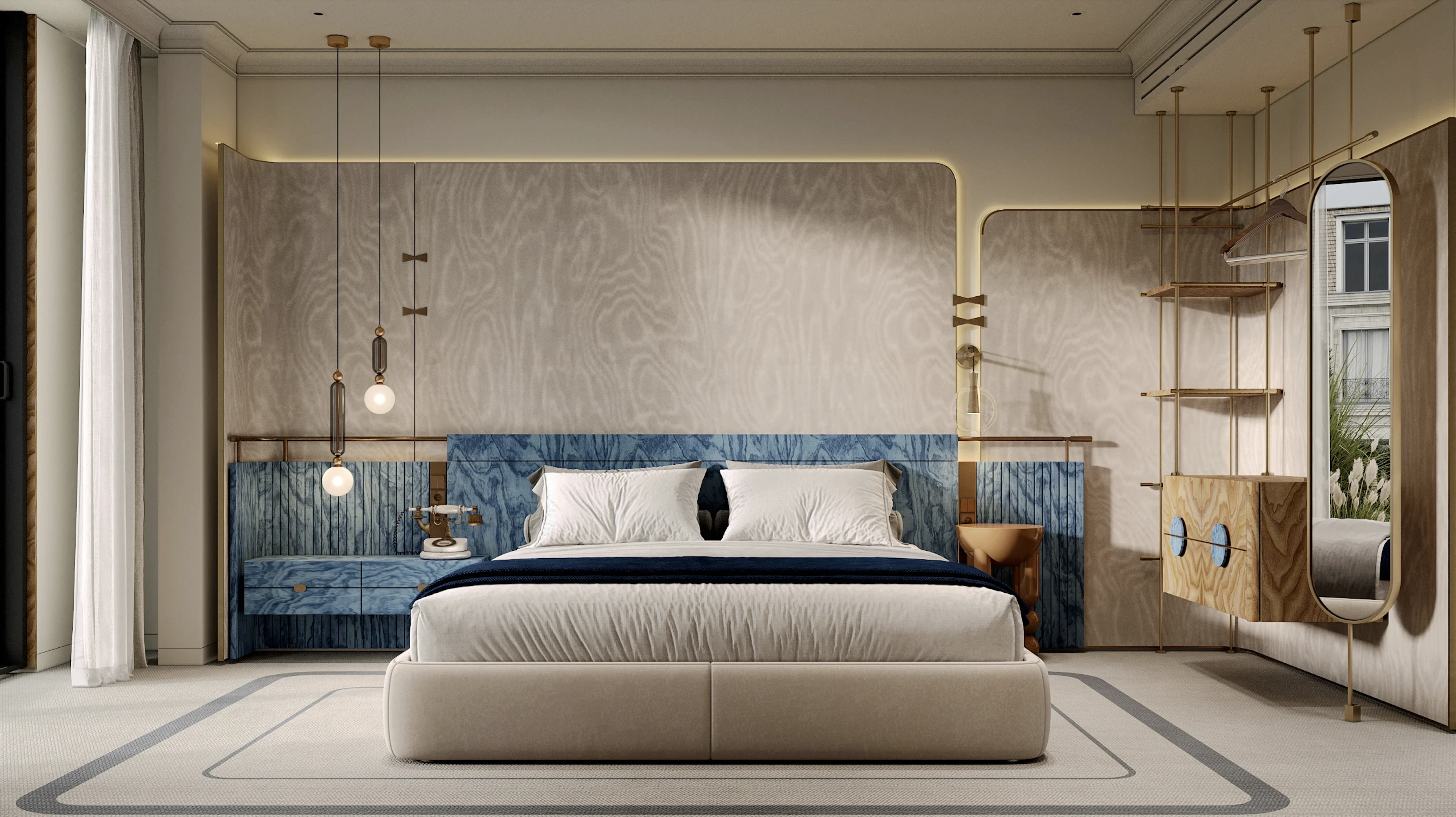
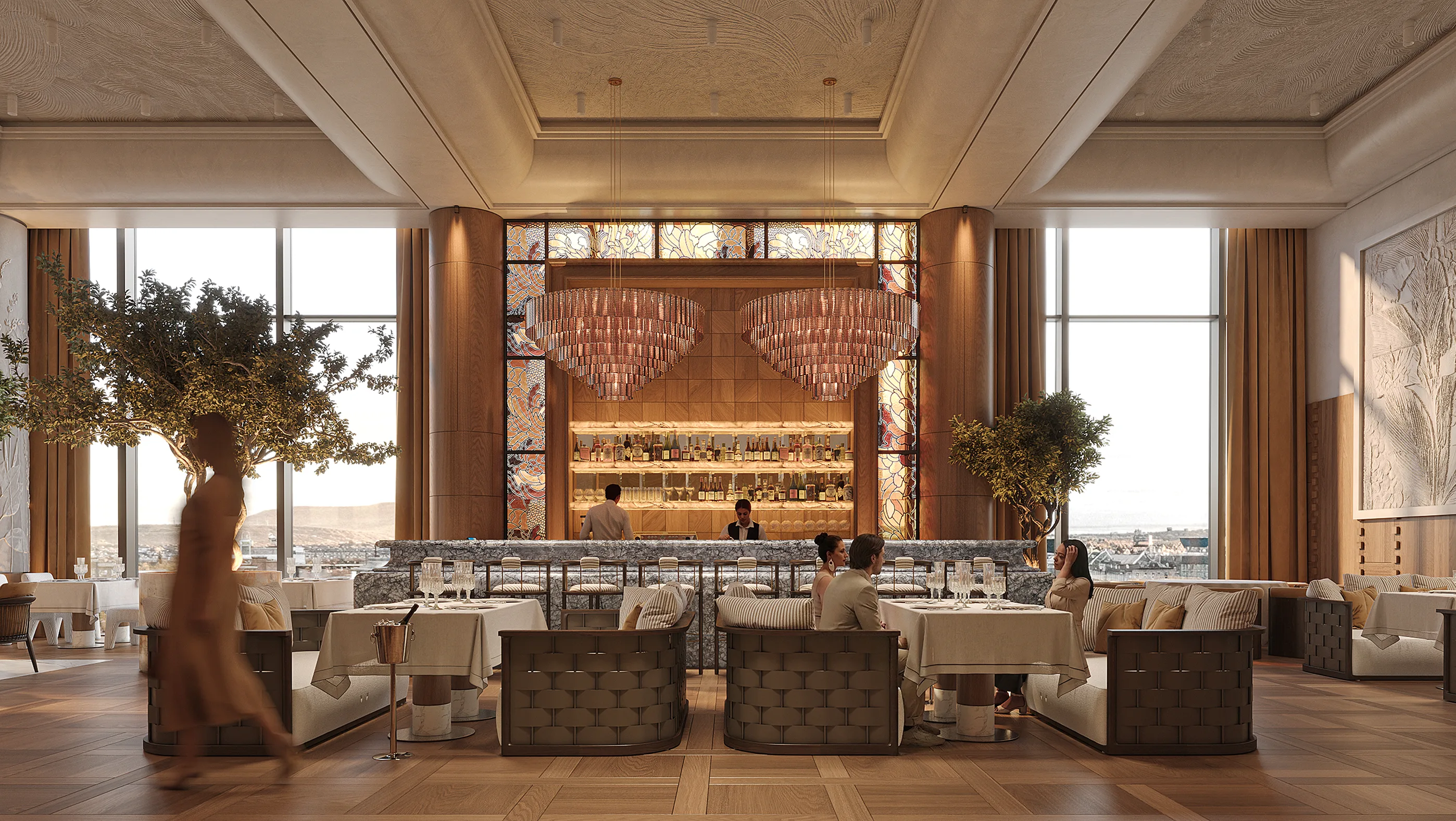
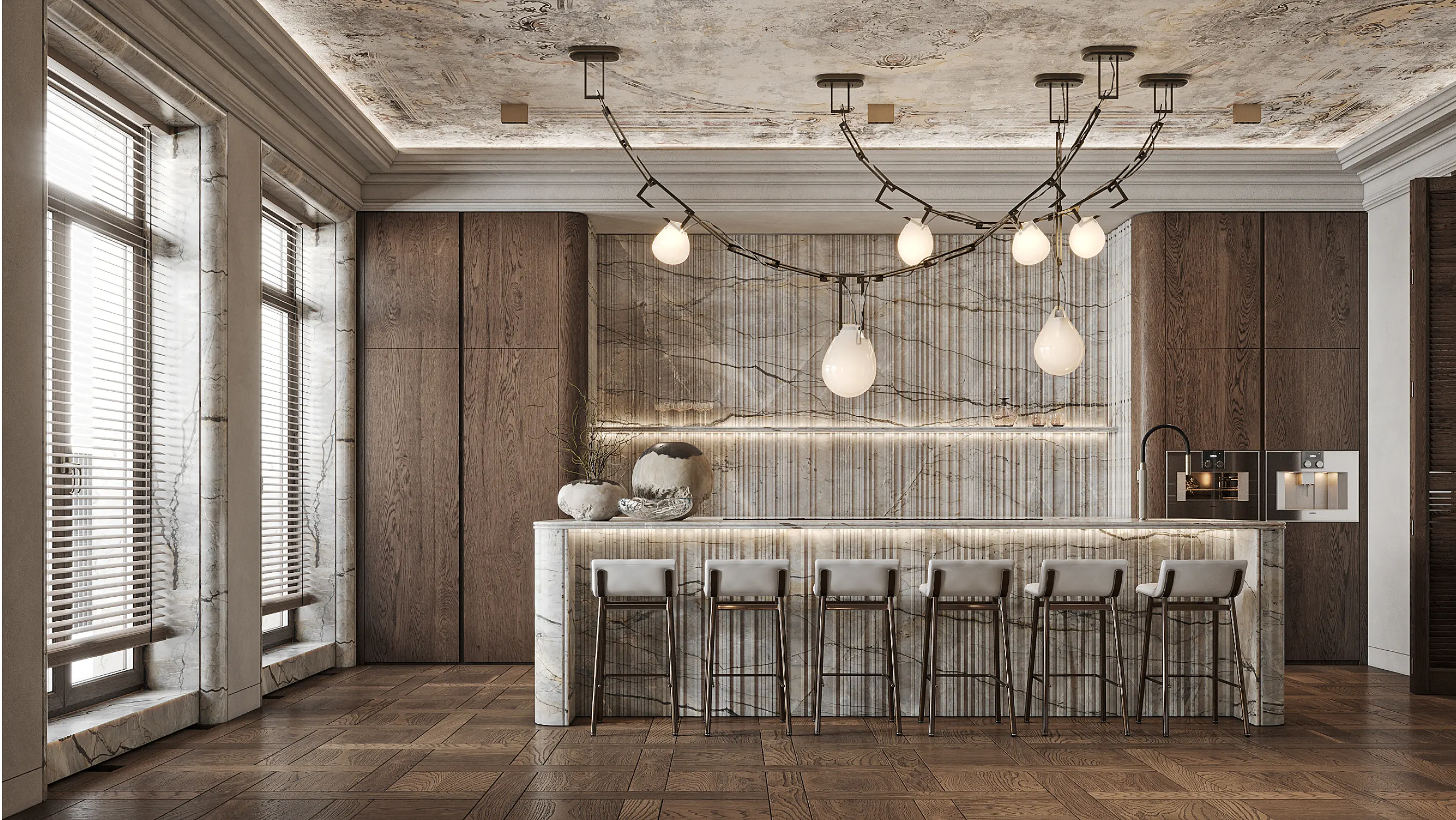
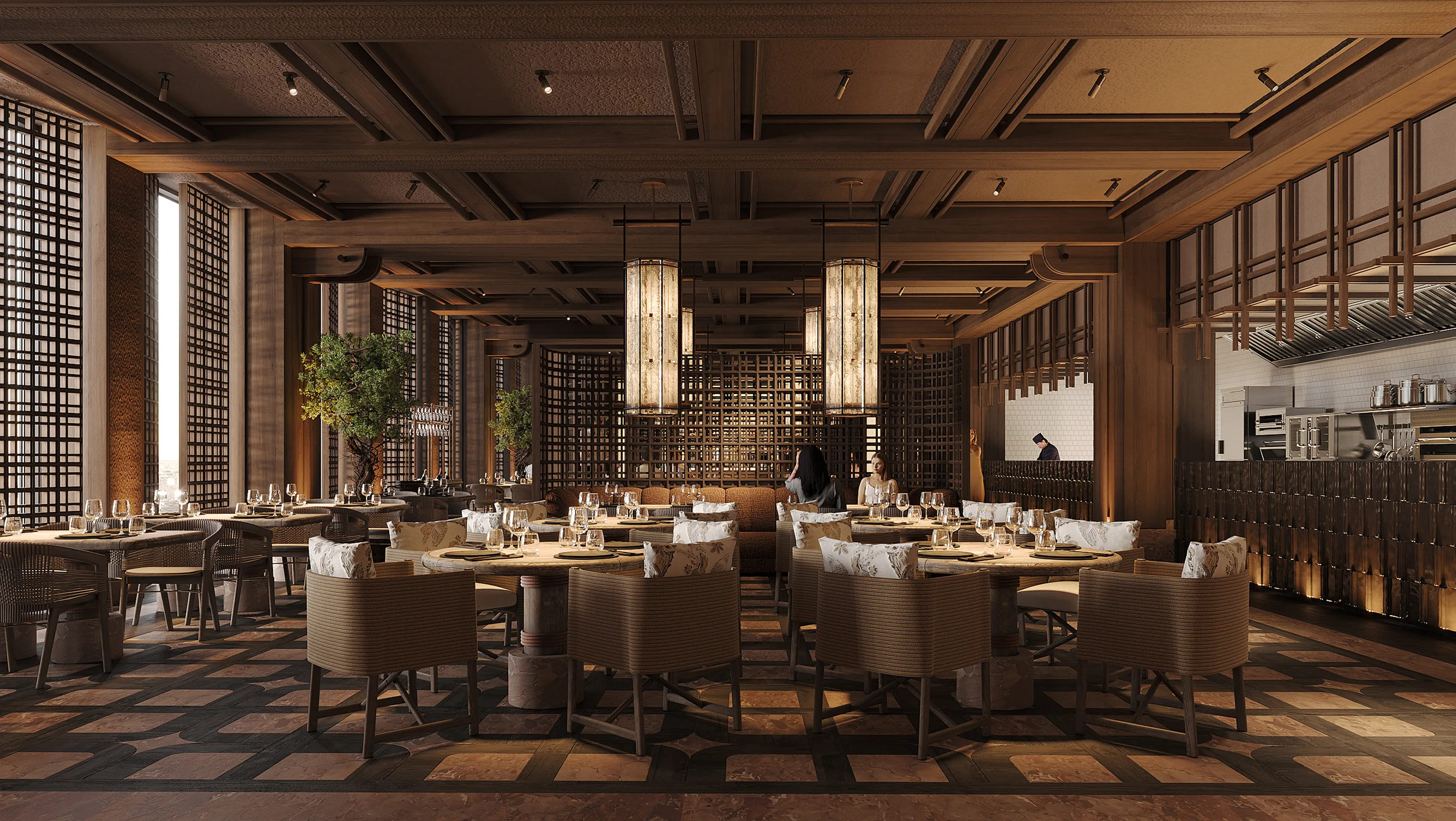
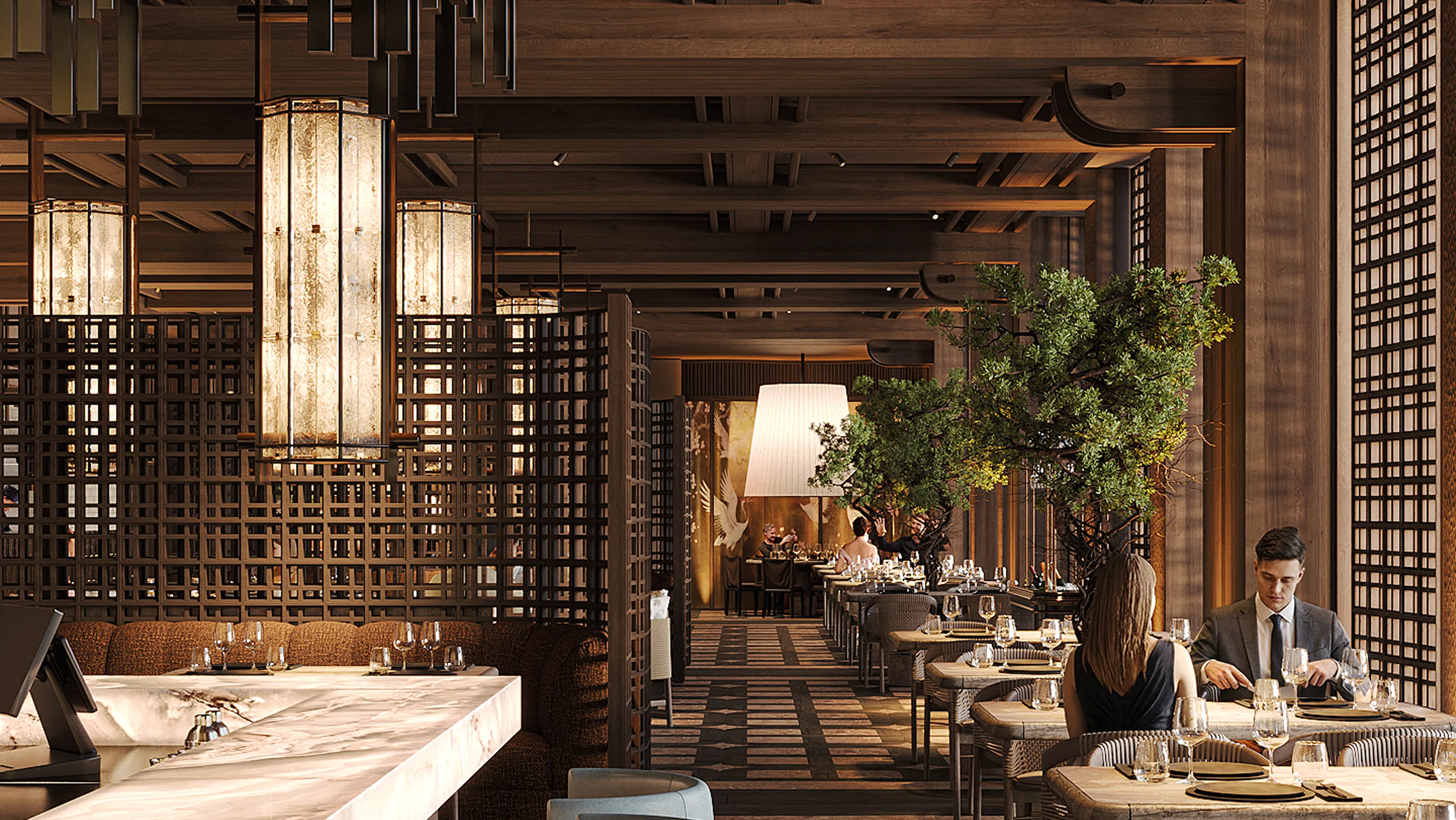
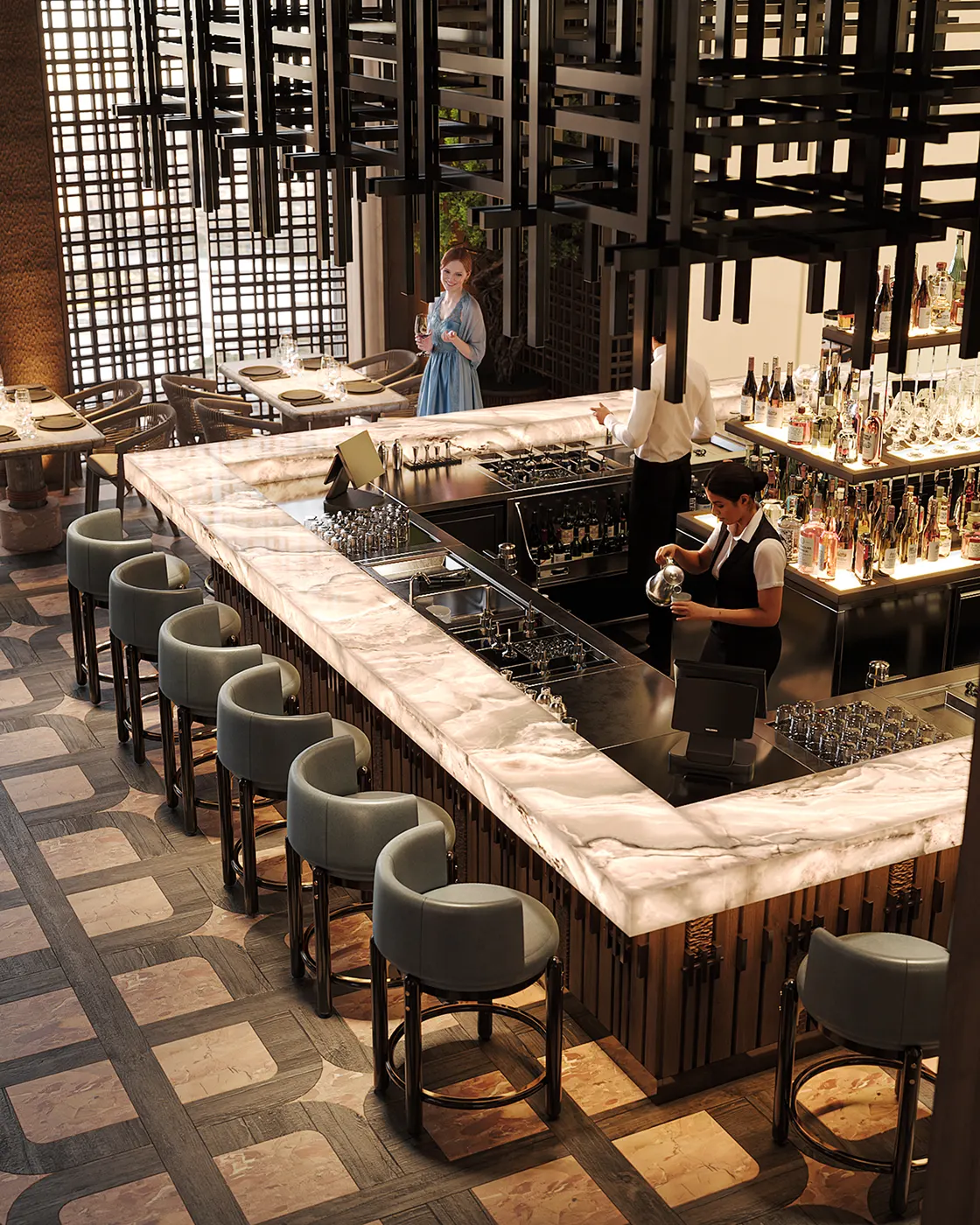
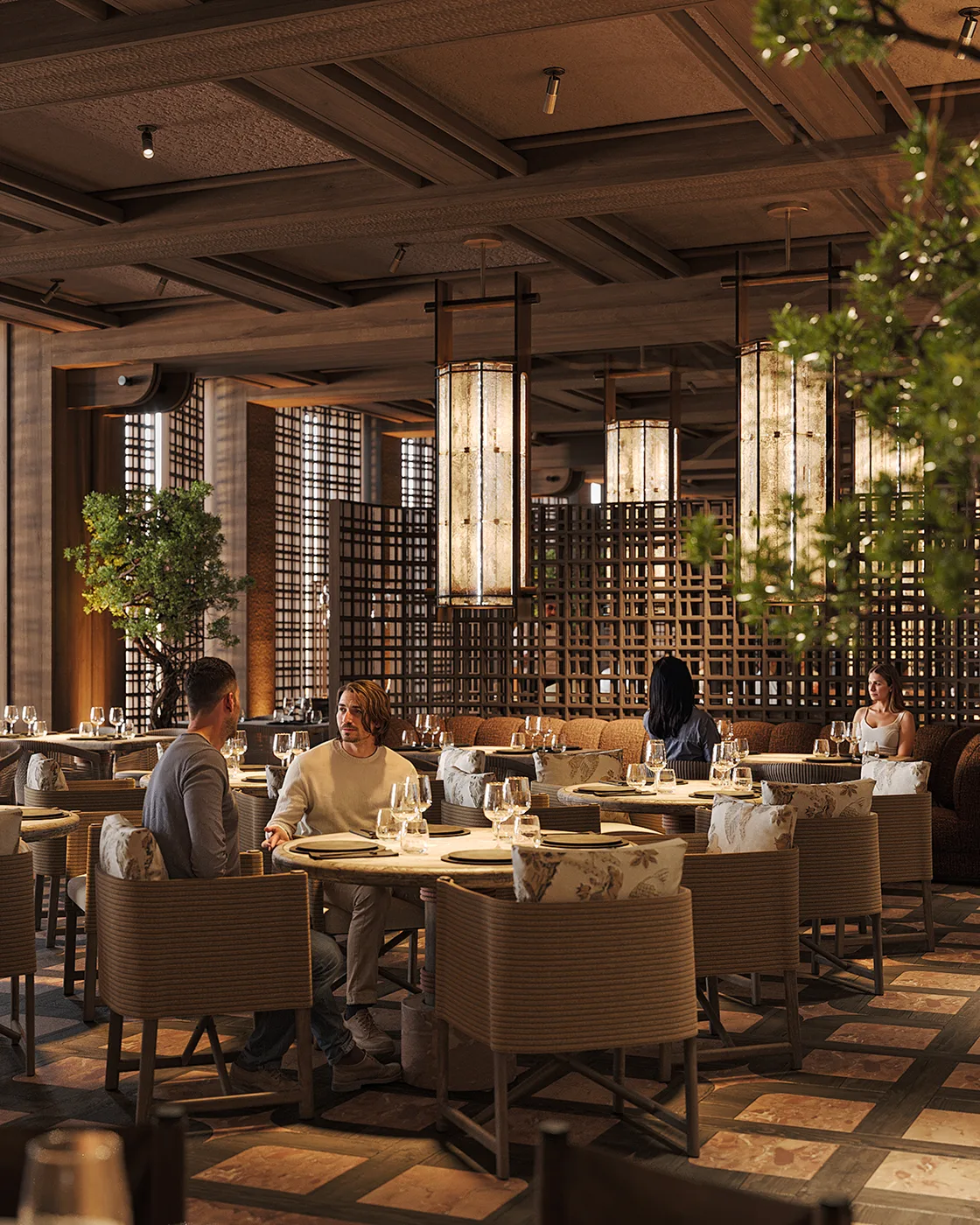
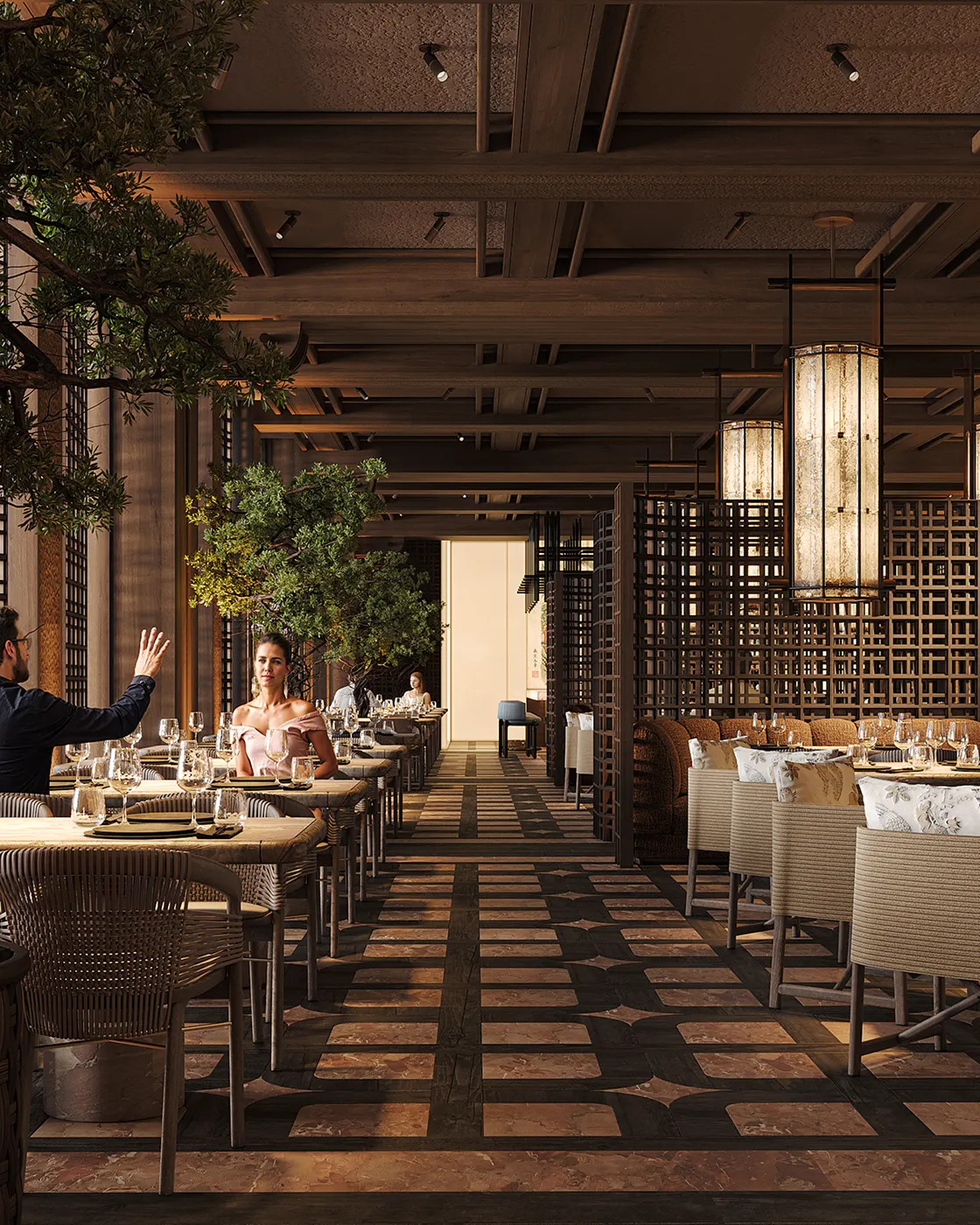
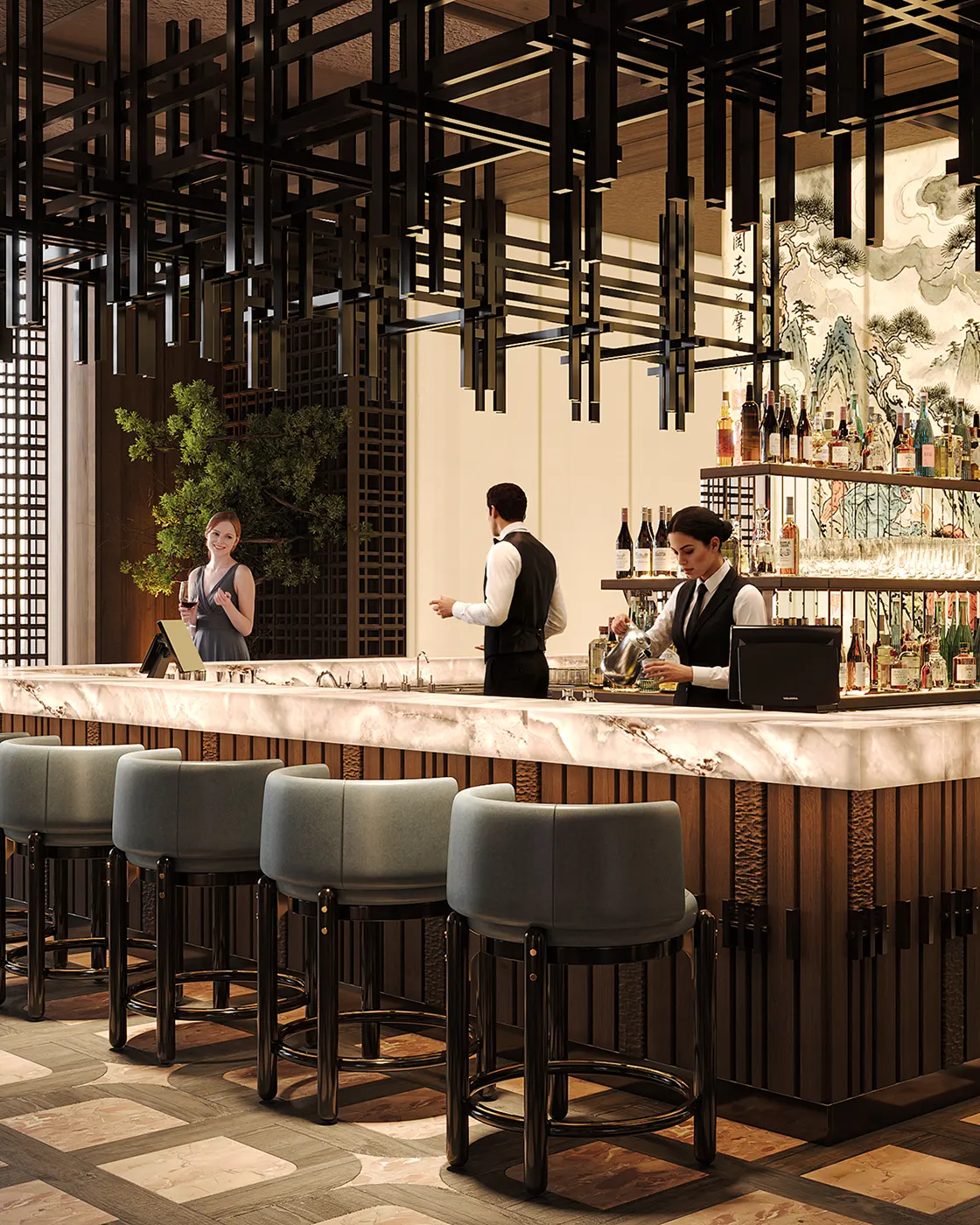
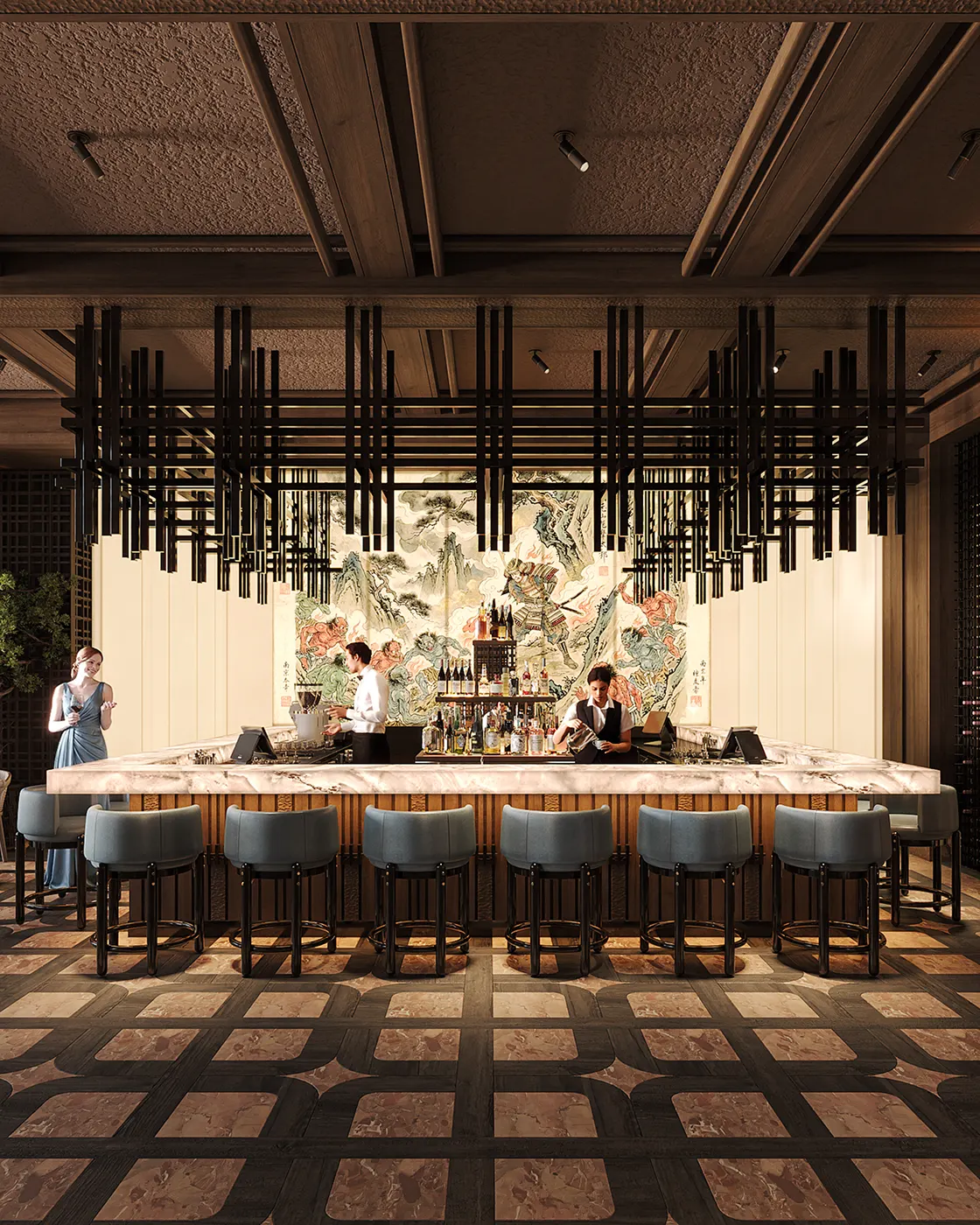
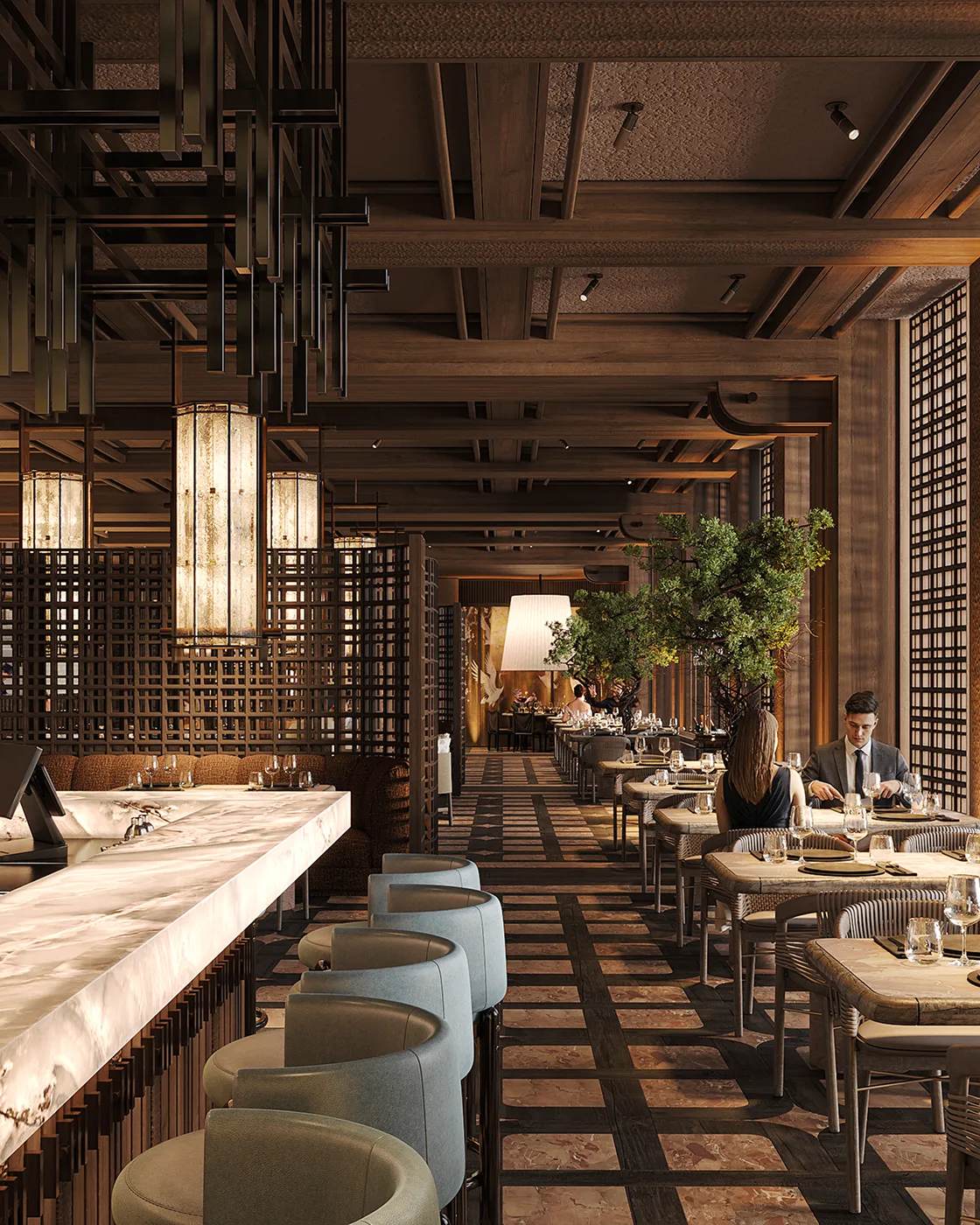
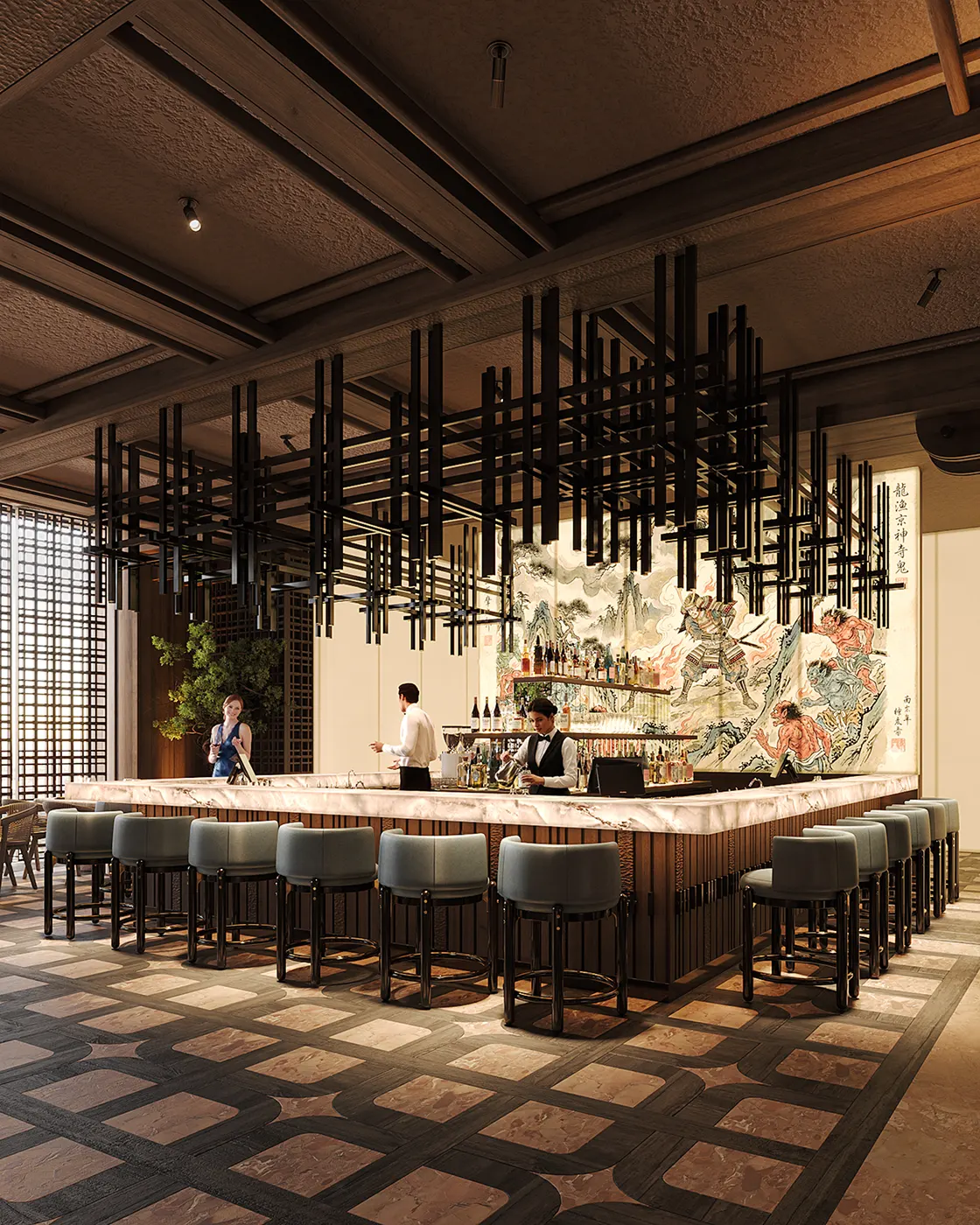
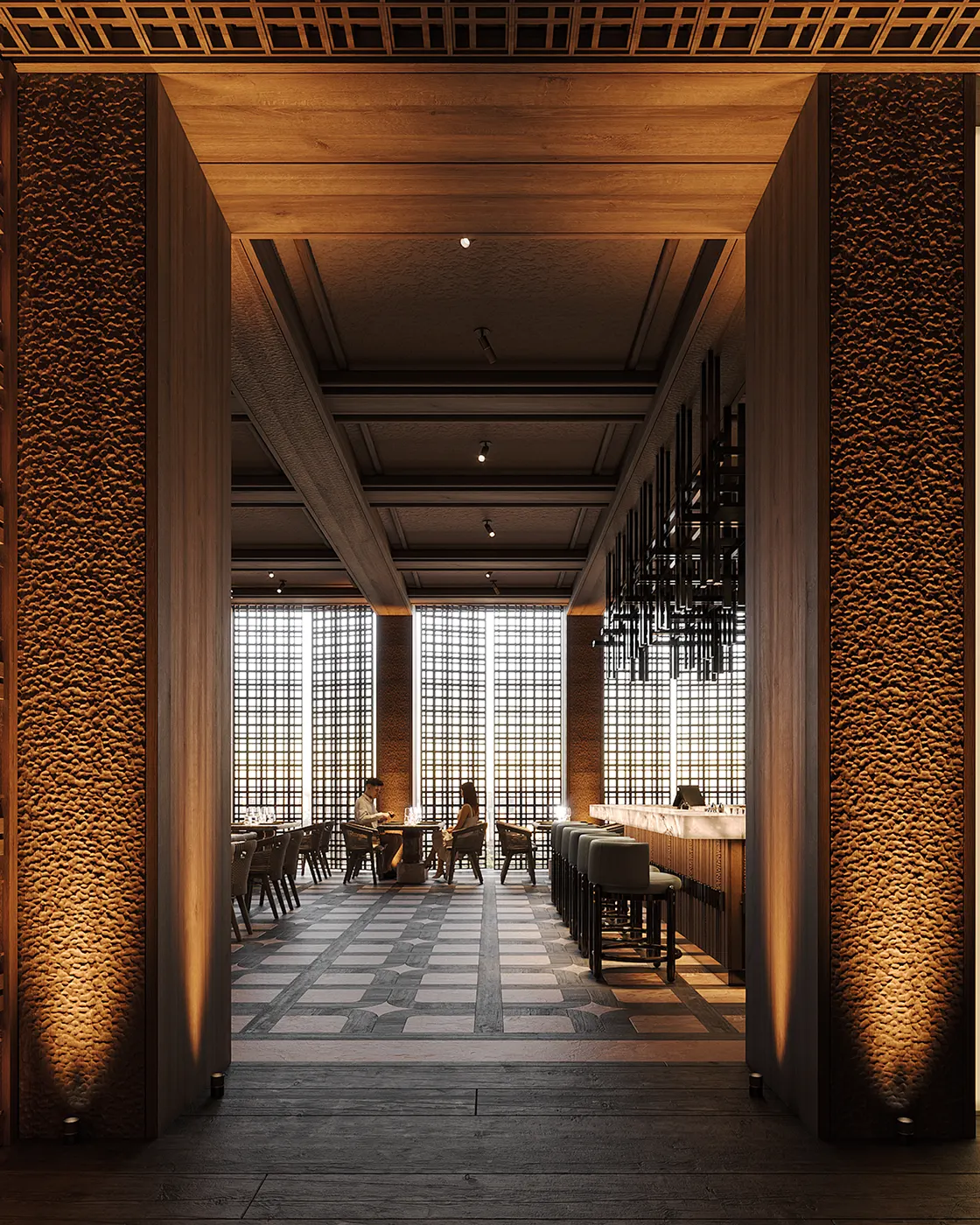
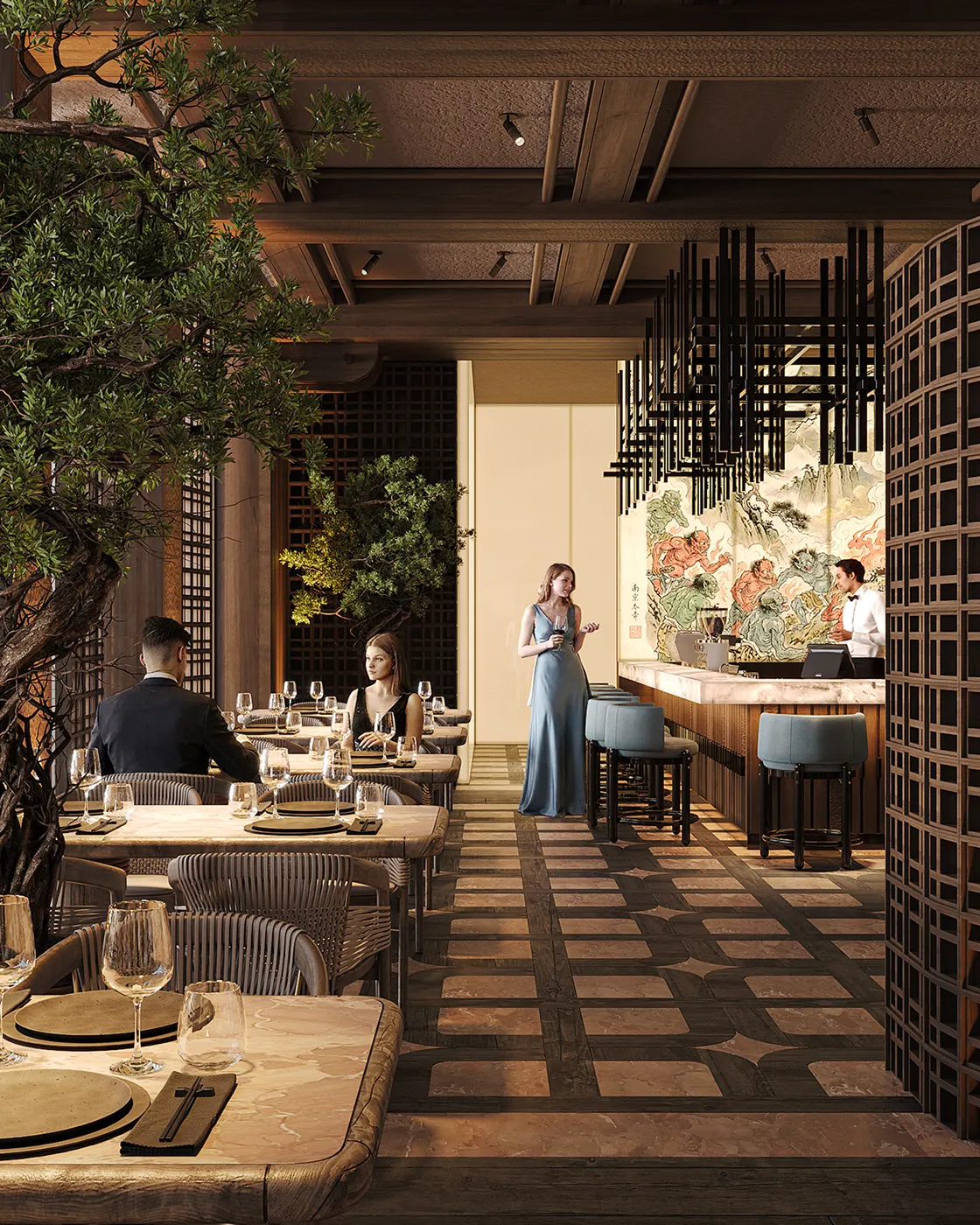
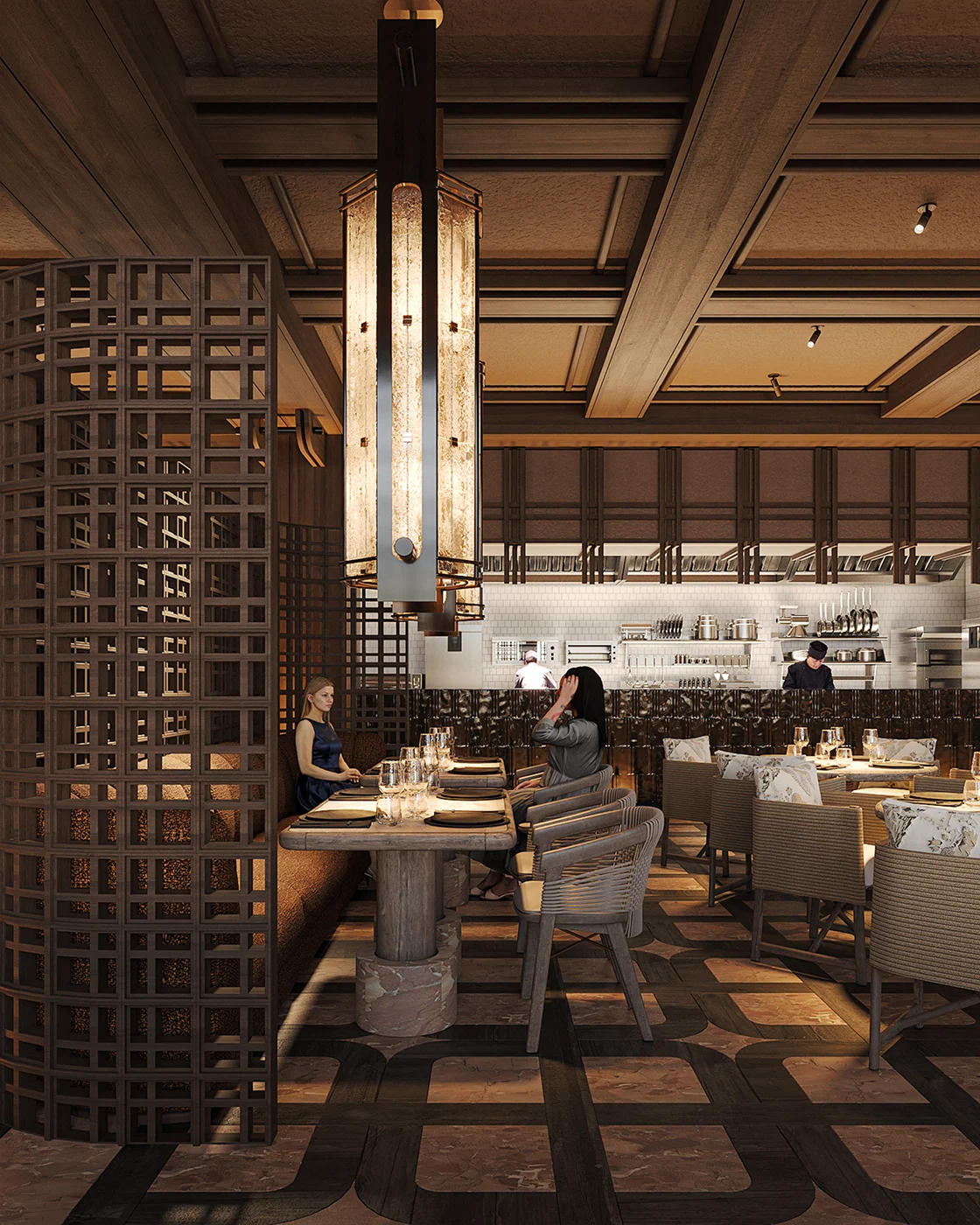
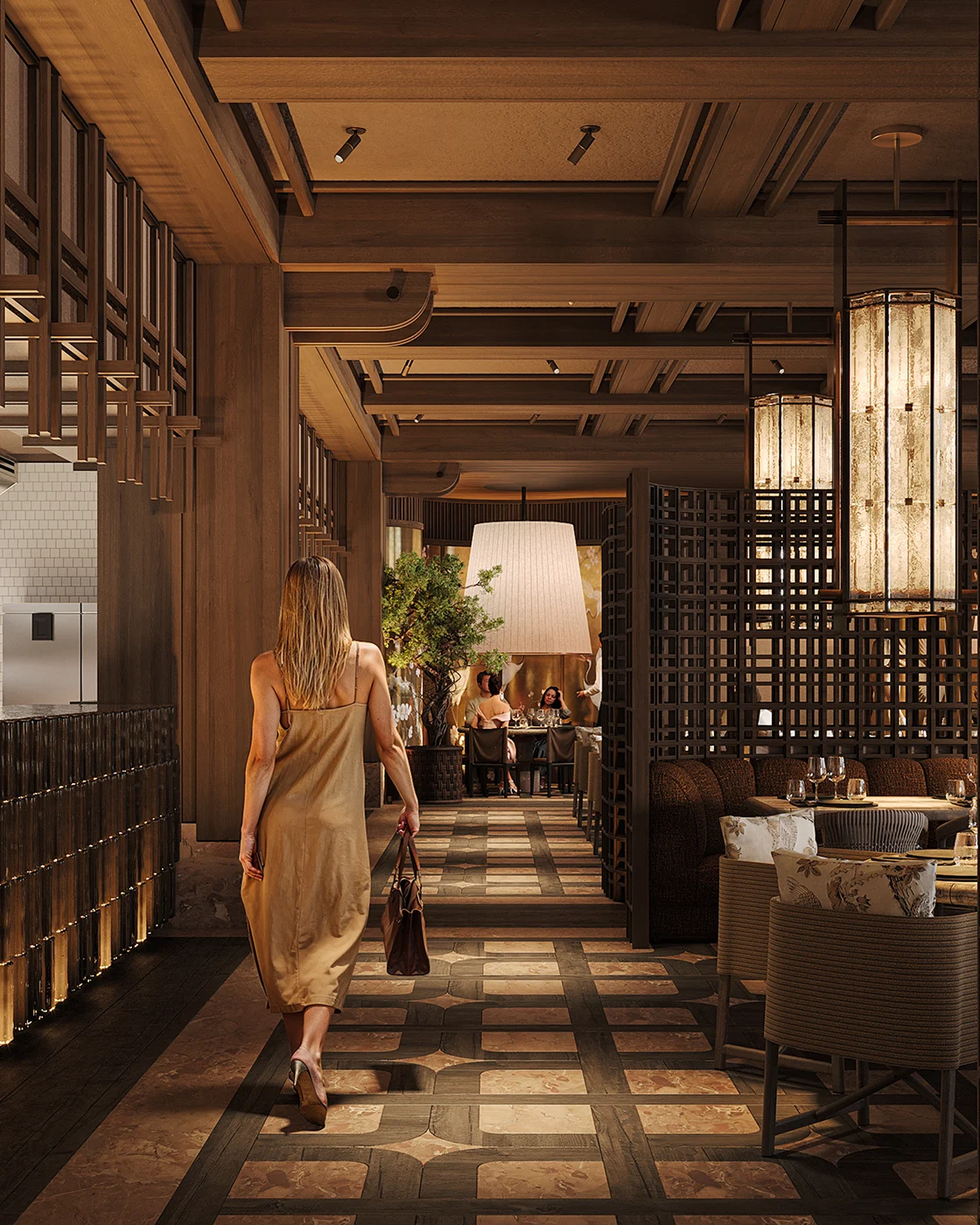
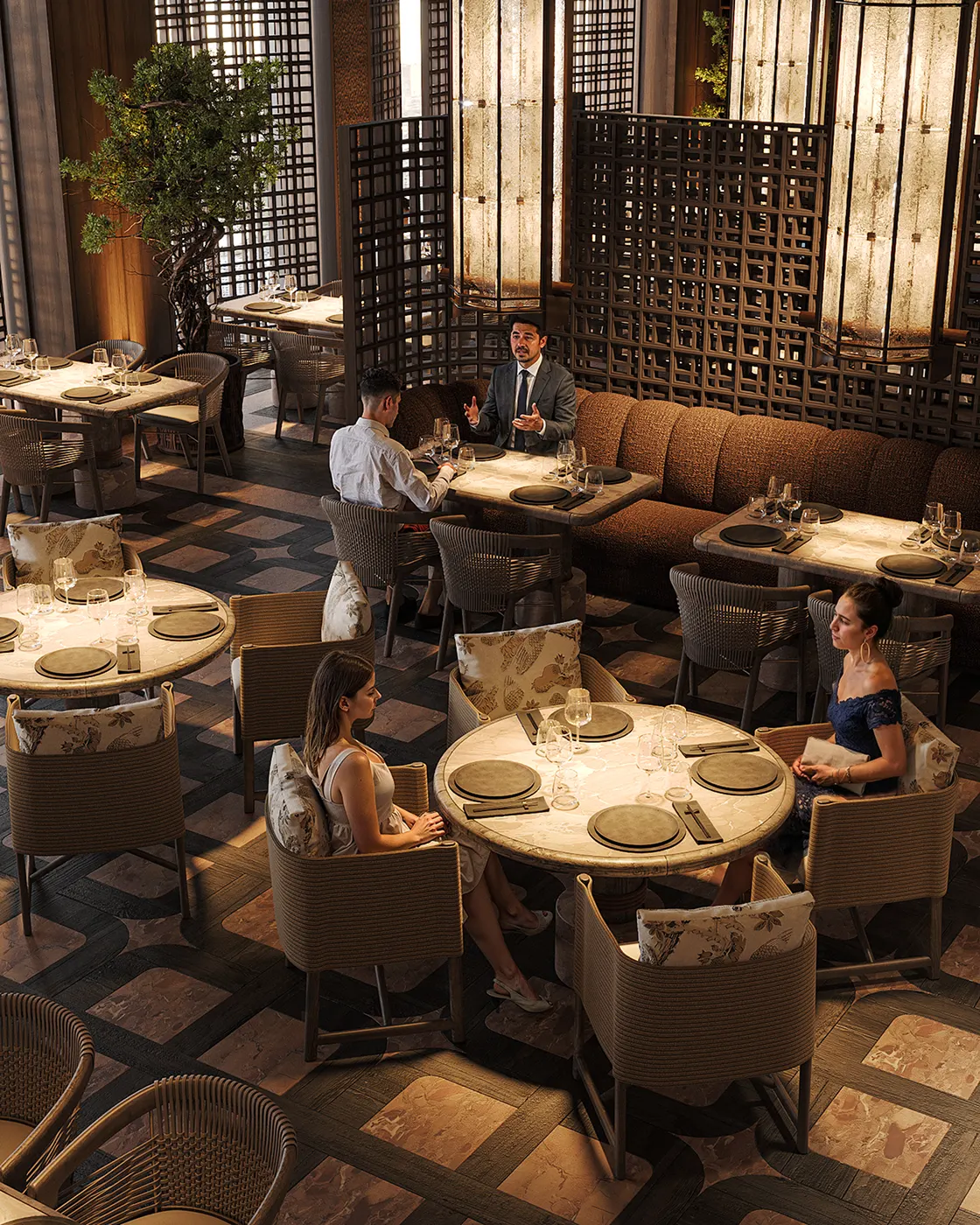
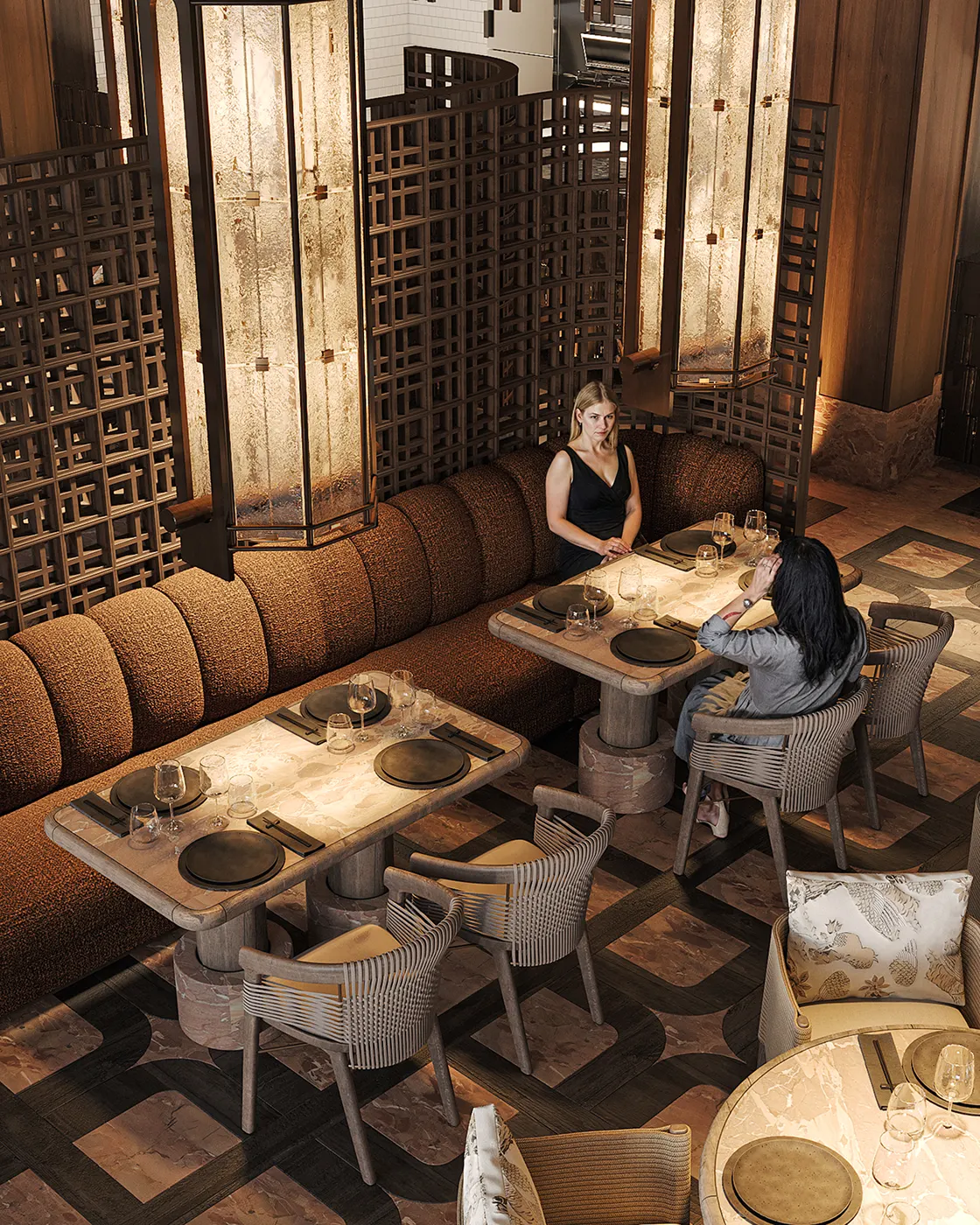
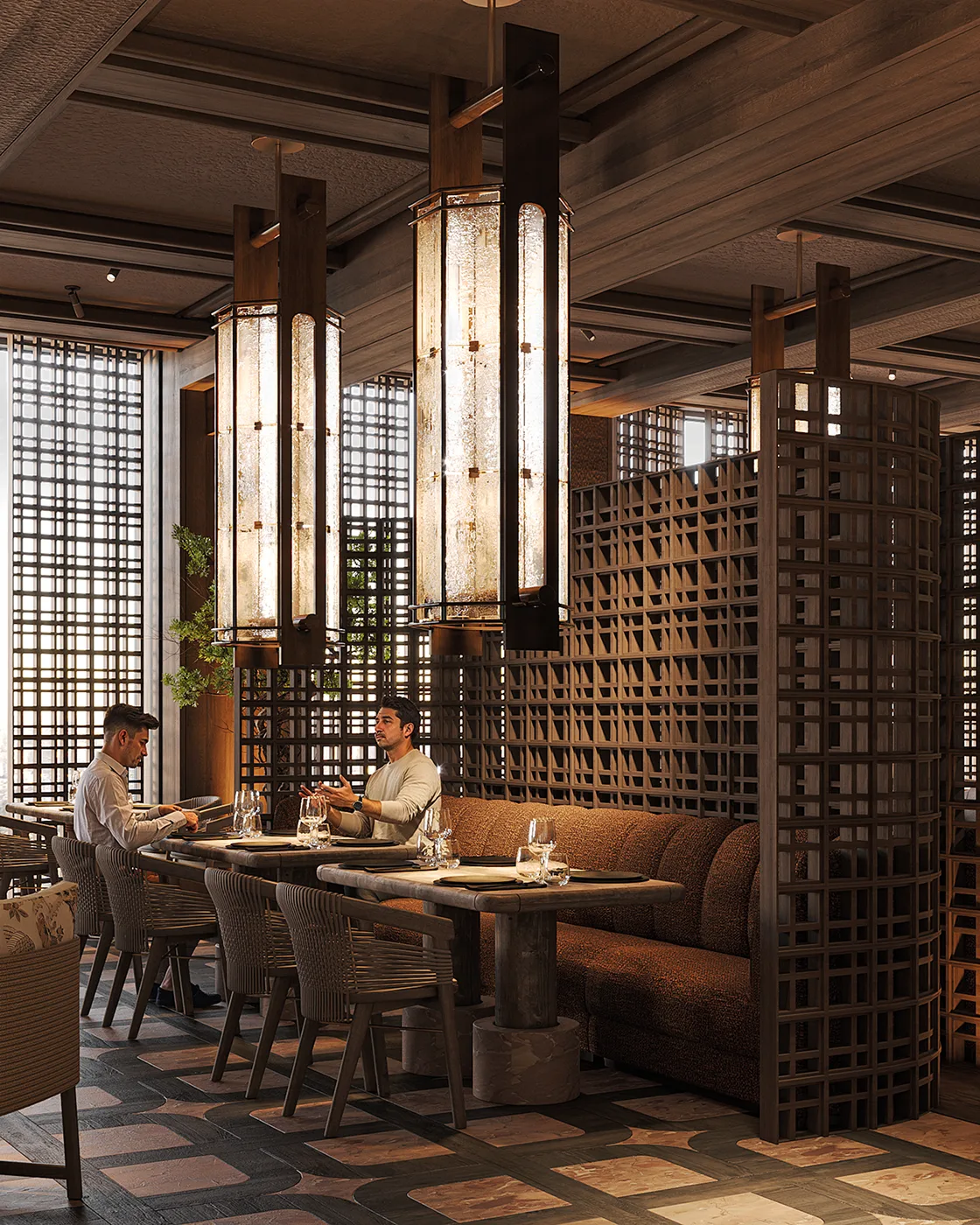
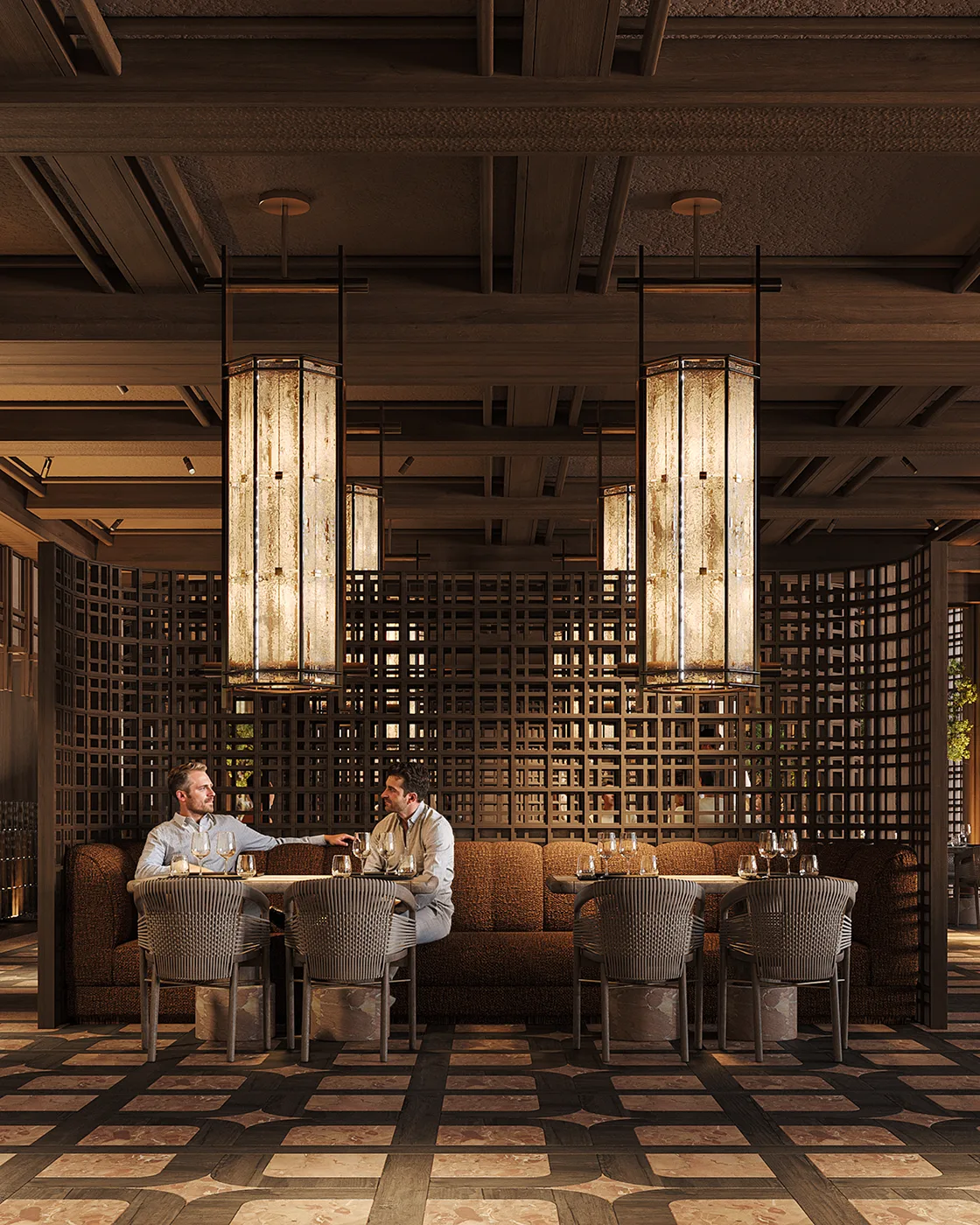
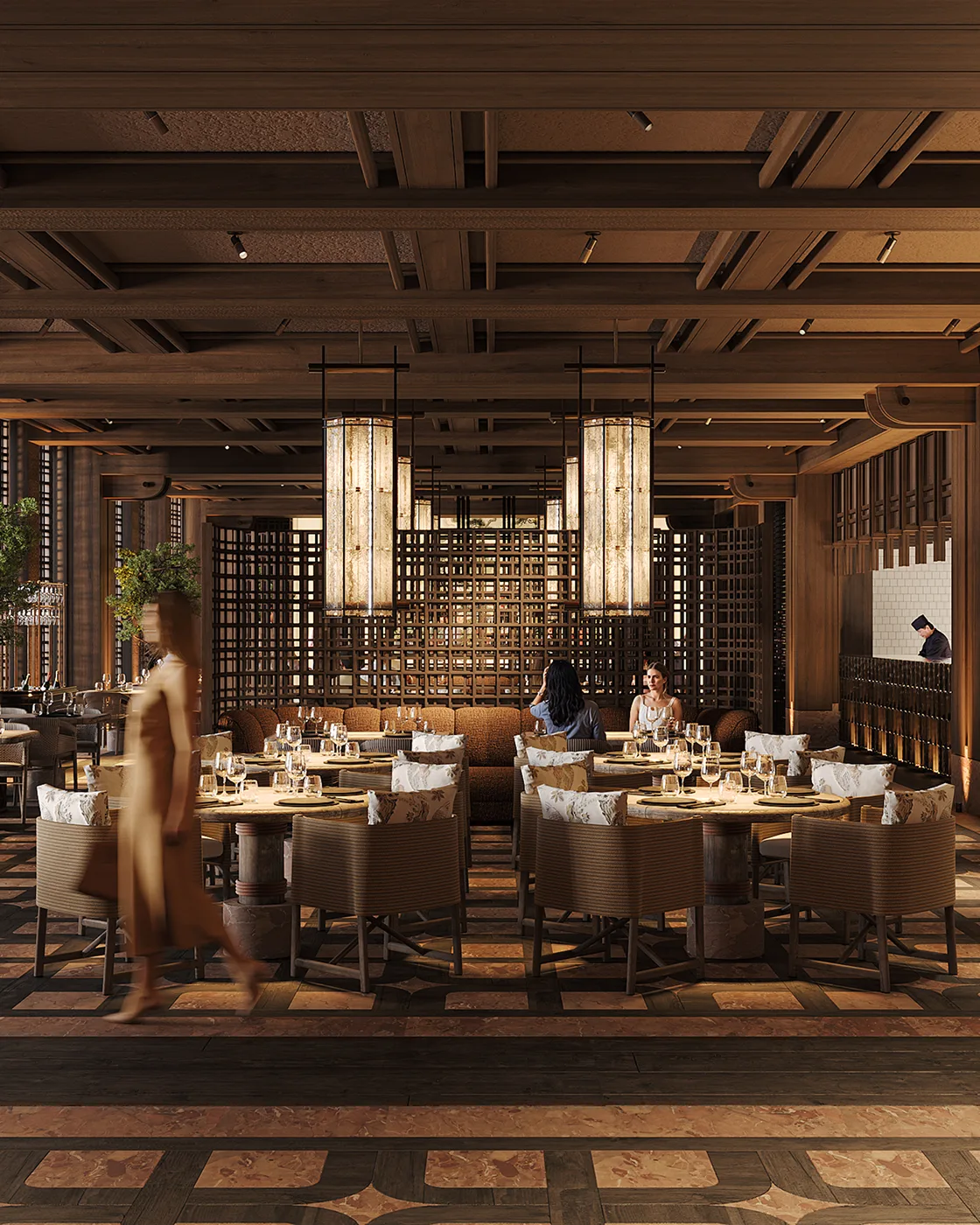
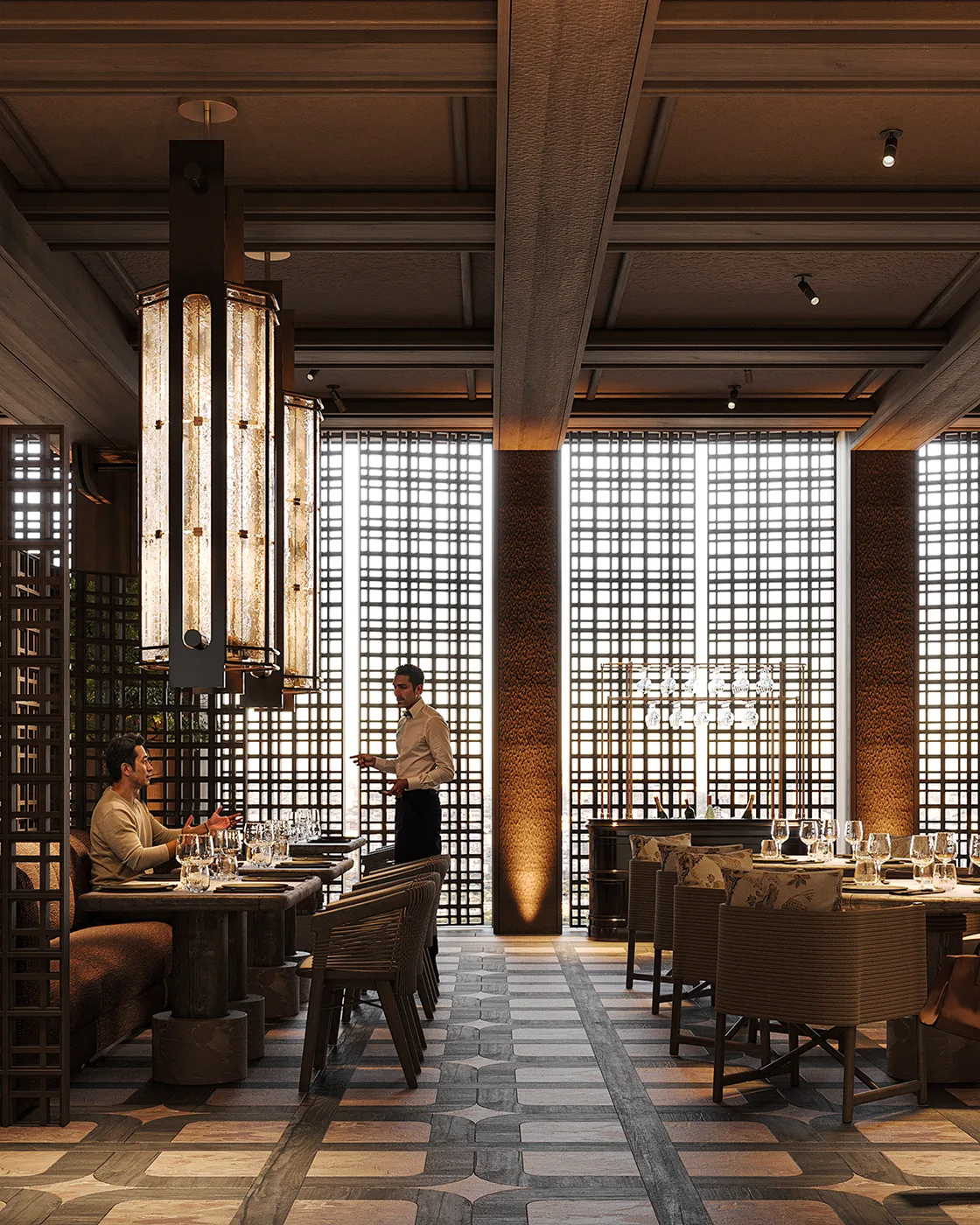
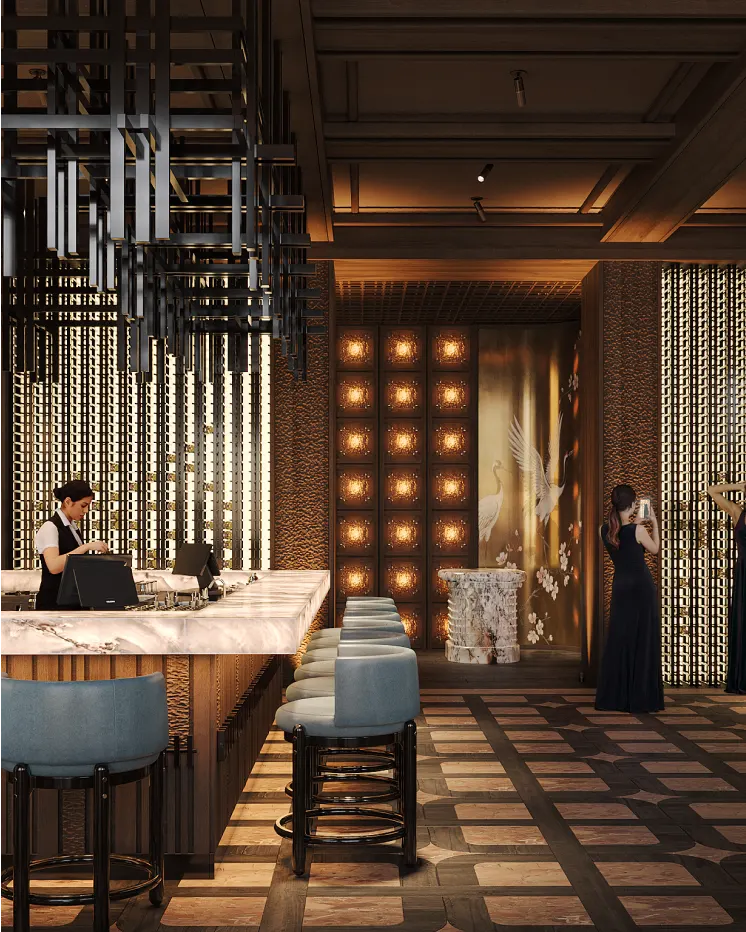
The space is built around the rhythm of wood. Solid beams, lattice structures, and a composed ceiling system form a clear architectural framework that defines scale, distance, and movement. Architecture does not decorate the interior here. It establishes order and holds the space together, allowing life to unfold within a disciplined structure.
This is not a stylized version of Japan.
It is an interpretation of its principles: spatial order, respect for emptiness, and precise control of every element.
The space is built around the rhythm of wood. Solid beams, lattice structures, and a composed ceiling system form a clear architectural framework that defines scale, distance, and movement. Architecture does not decorate the interior here. It establishes order and holds the space together, allowing life to unfold within a disciplined structure.
This is not a stylized version of Japan.
It is an interpretation of its principles: spatial order, respect for emptiness, and precise control of every element.

London, United Kingdom
London,
United Kingdom
Challenge
To create a space that responds to both human experience and architectural context while resolving functional and aesthetic demands within a unified design language.
To create a space that responds to both human experience and architectural context while resolving functional and aesthetic demands within a unified design language.
The
The
Project
Project
Challenge
Challenge
Defines Outcomes
Defines Outcomes
Discuss Your Project
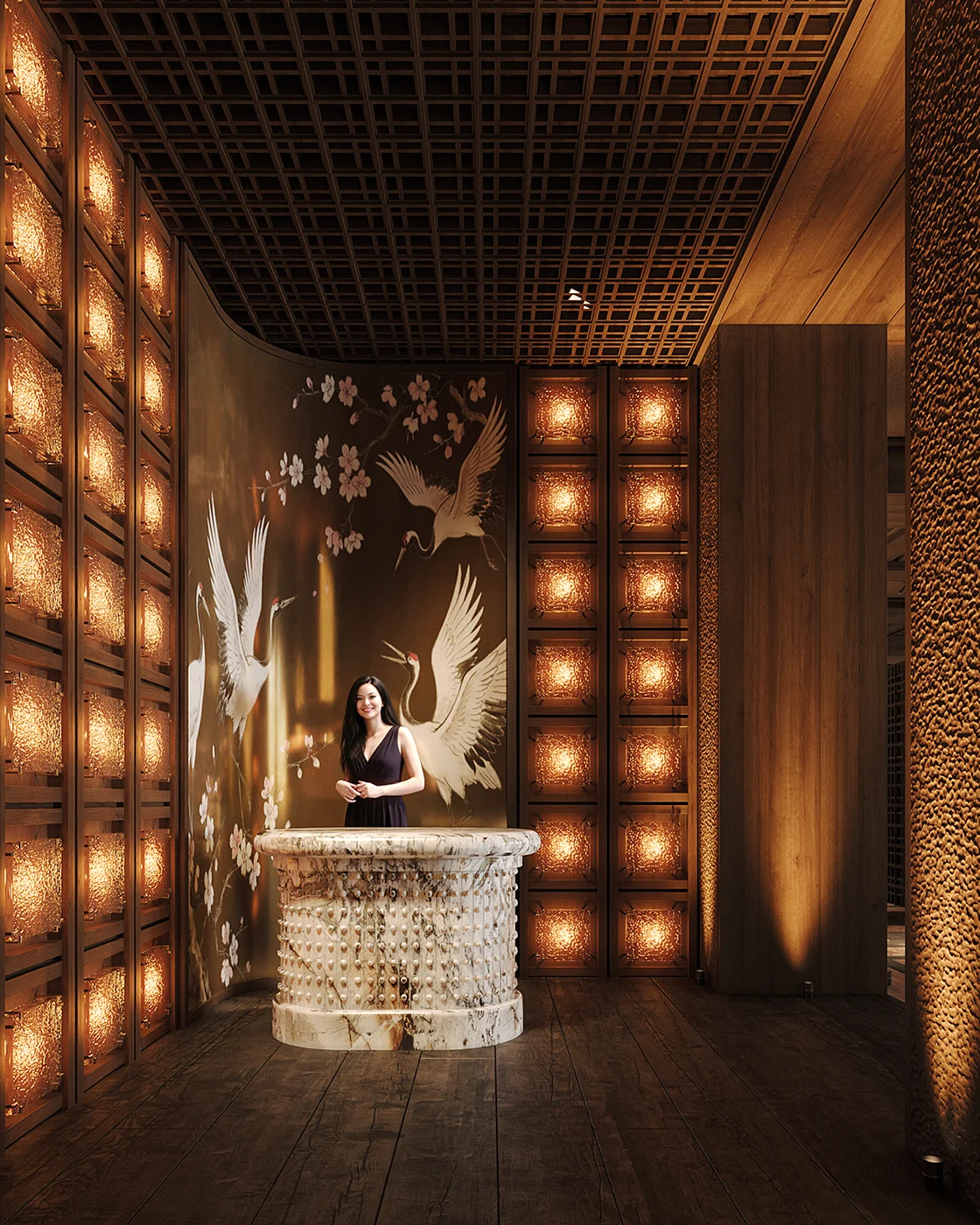
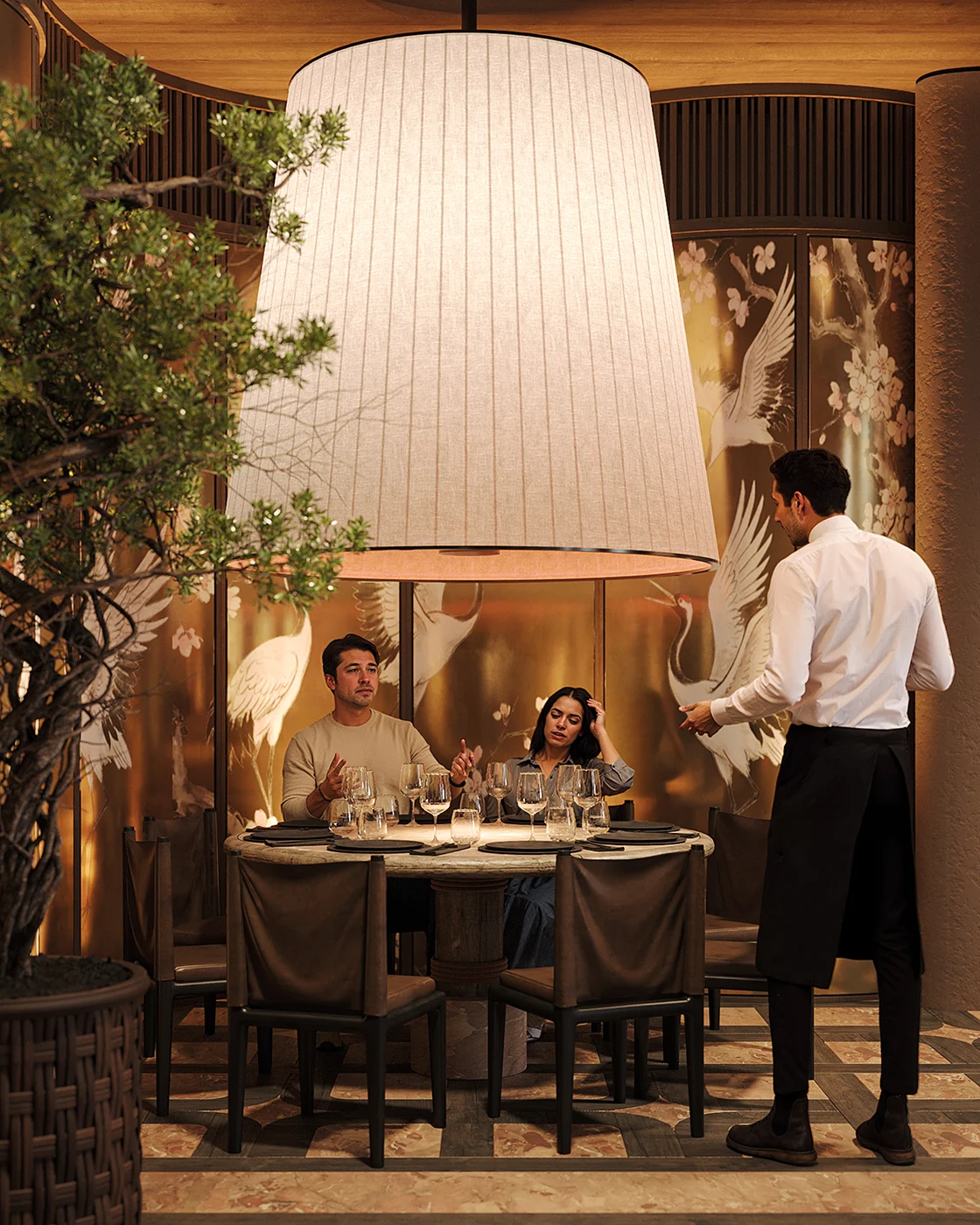
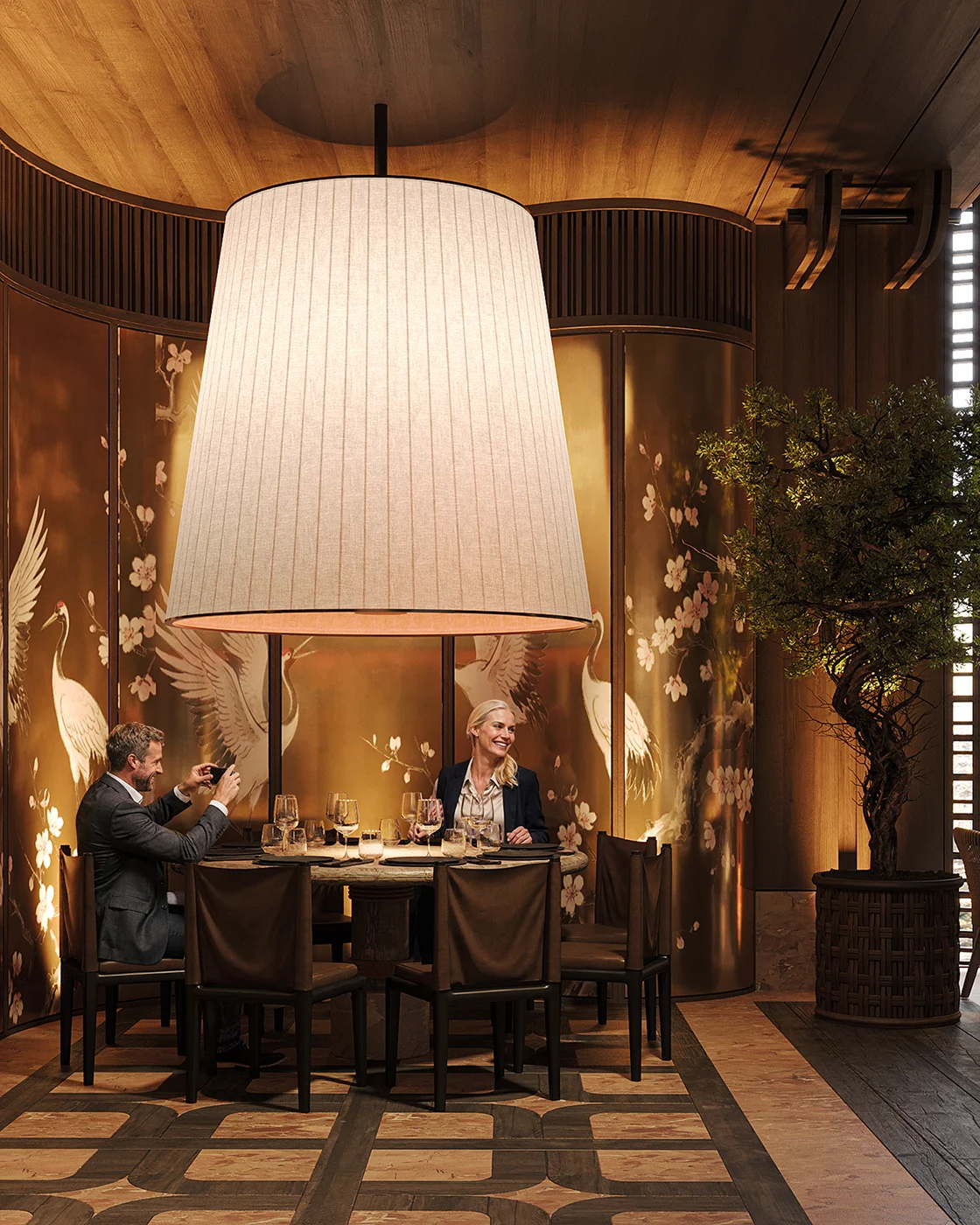
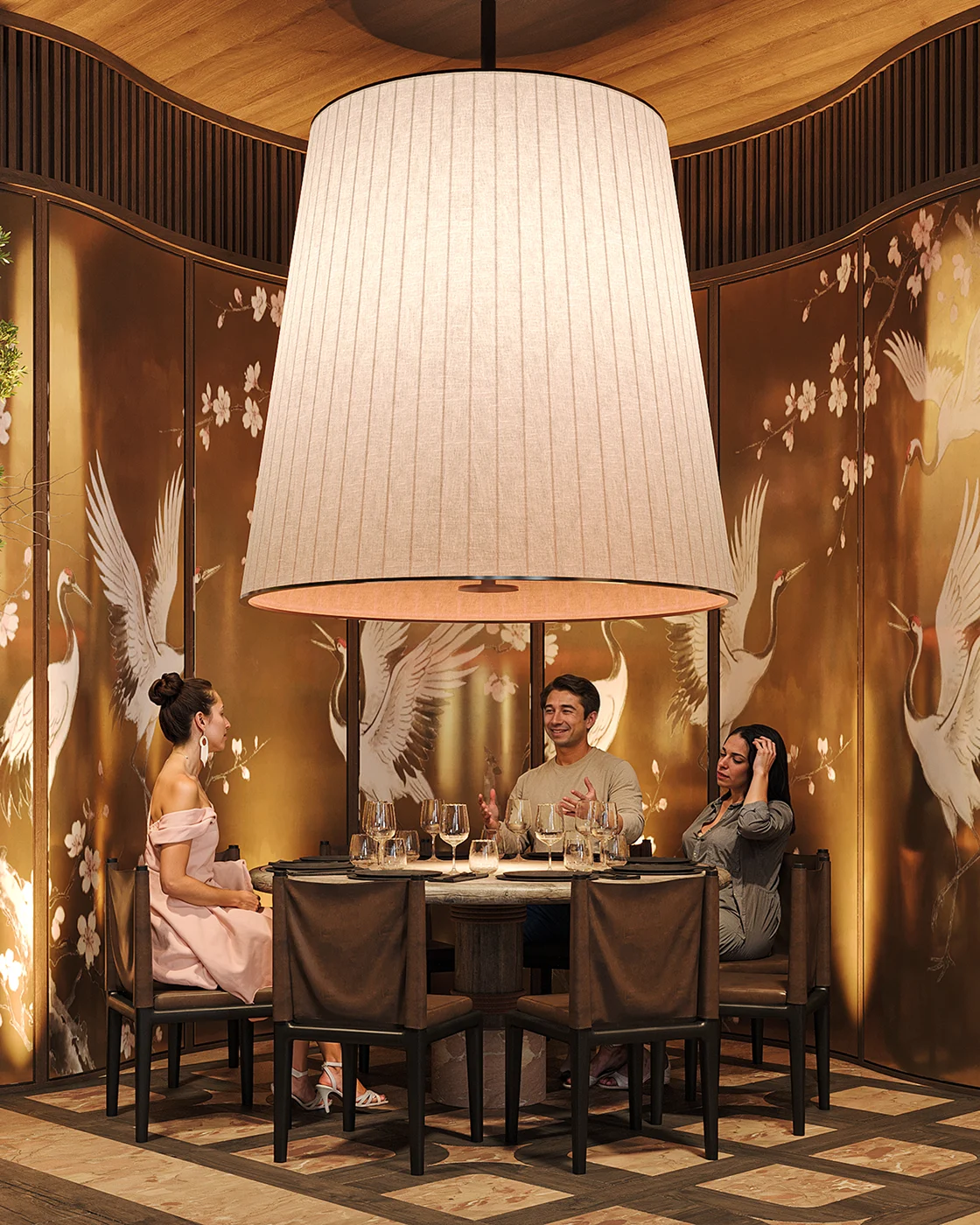
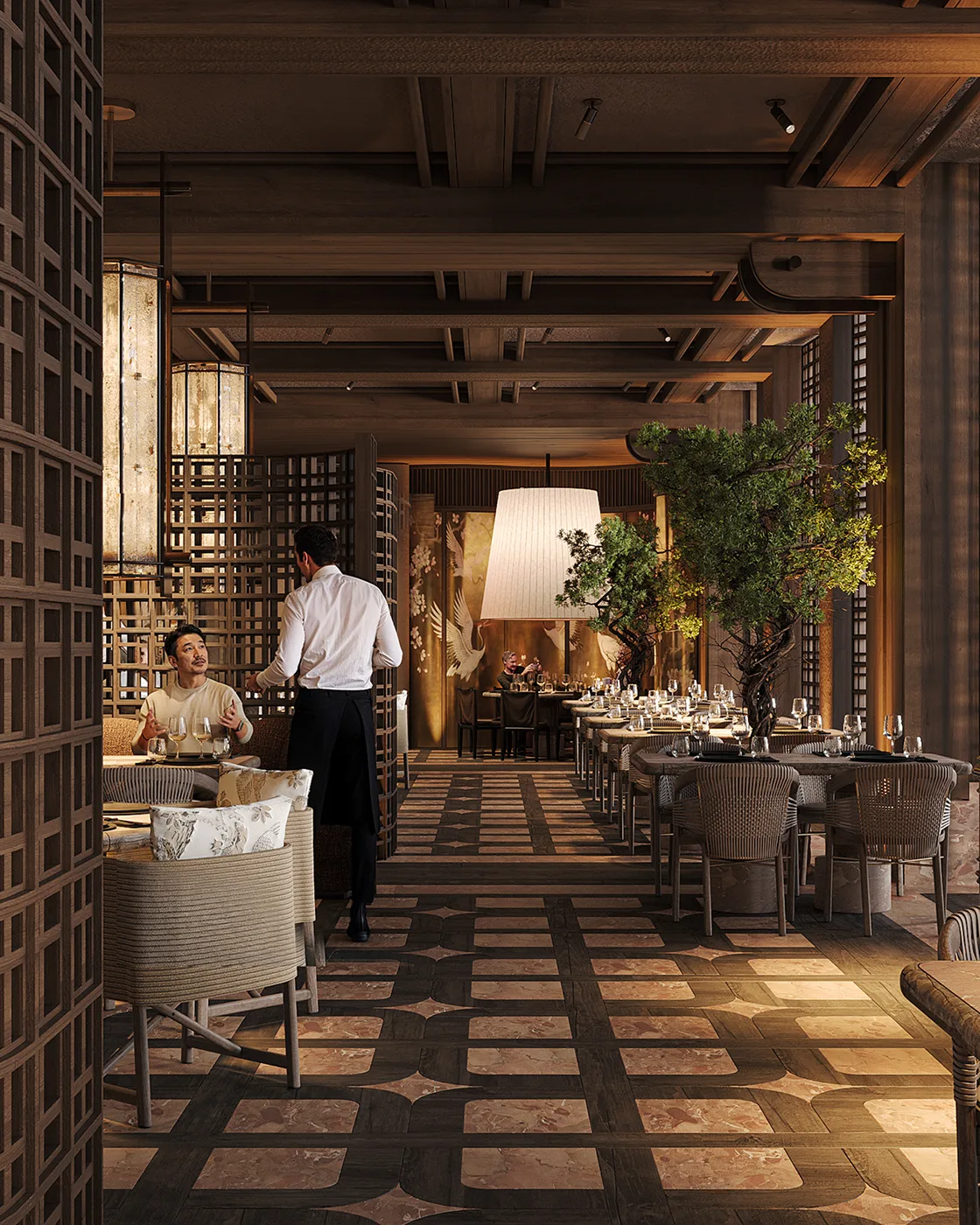
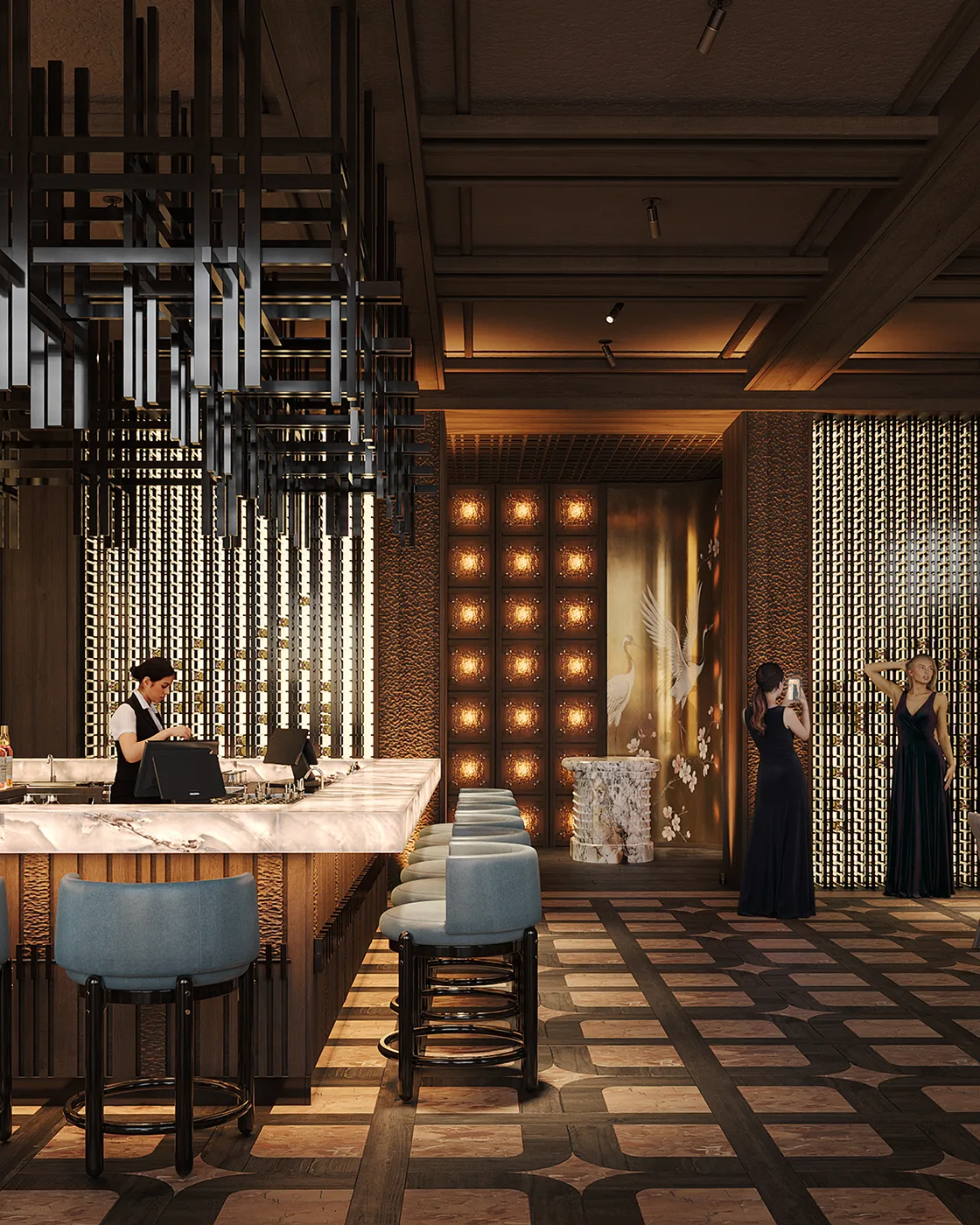
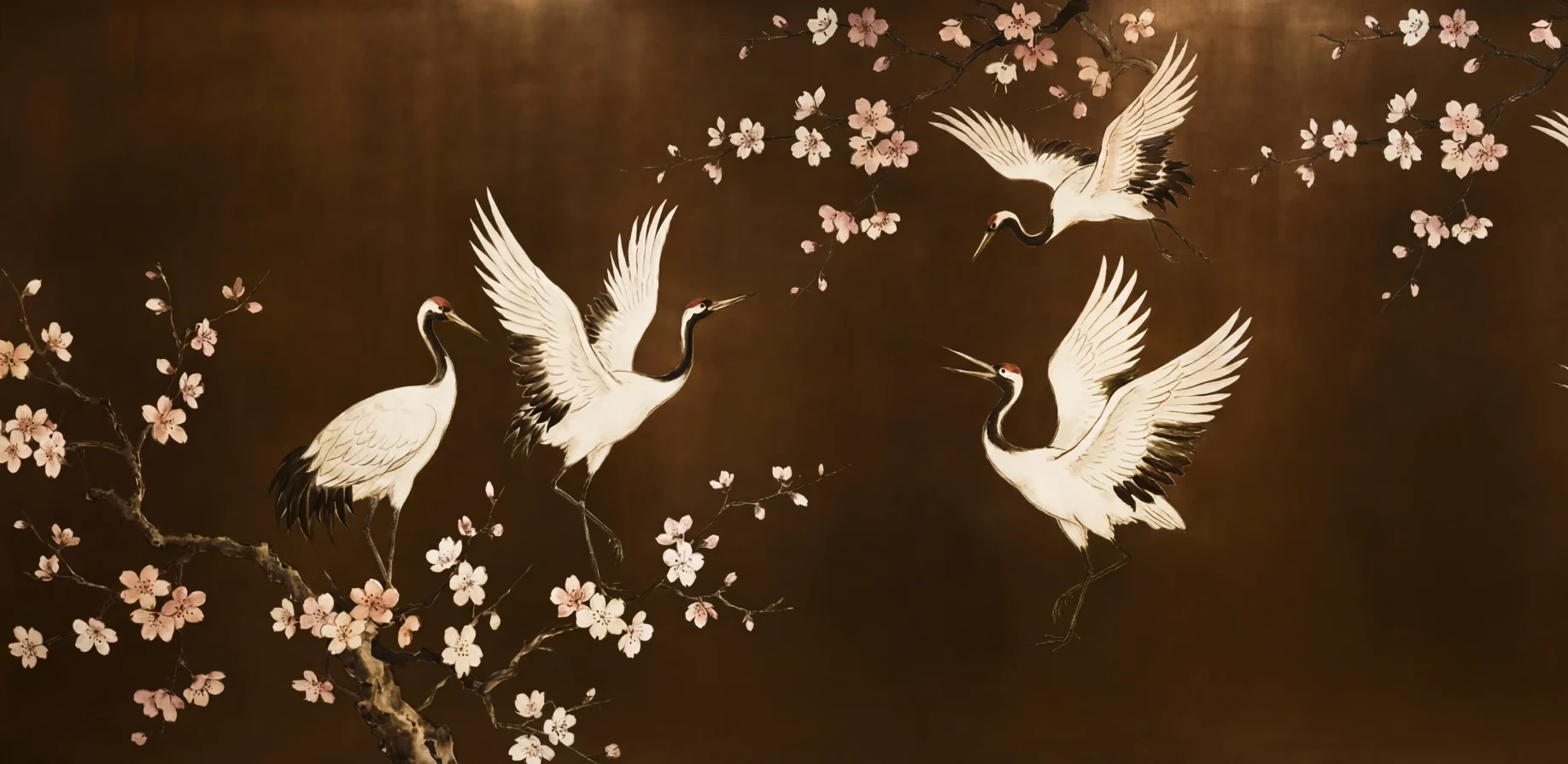
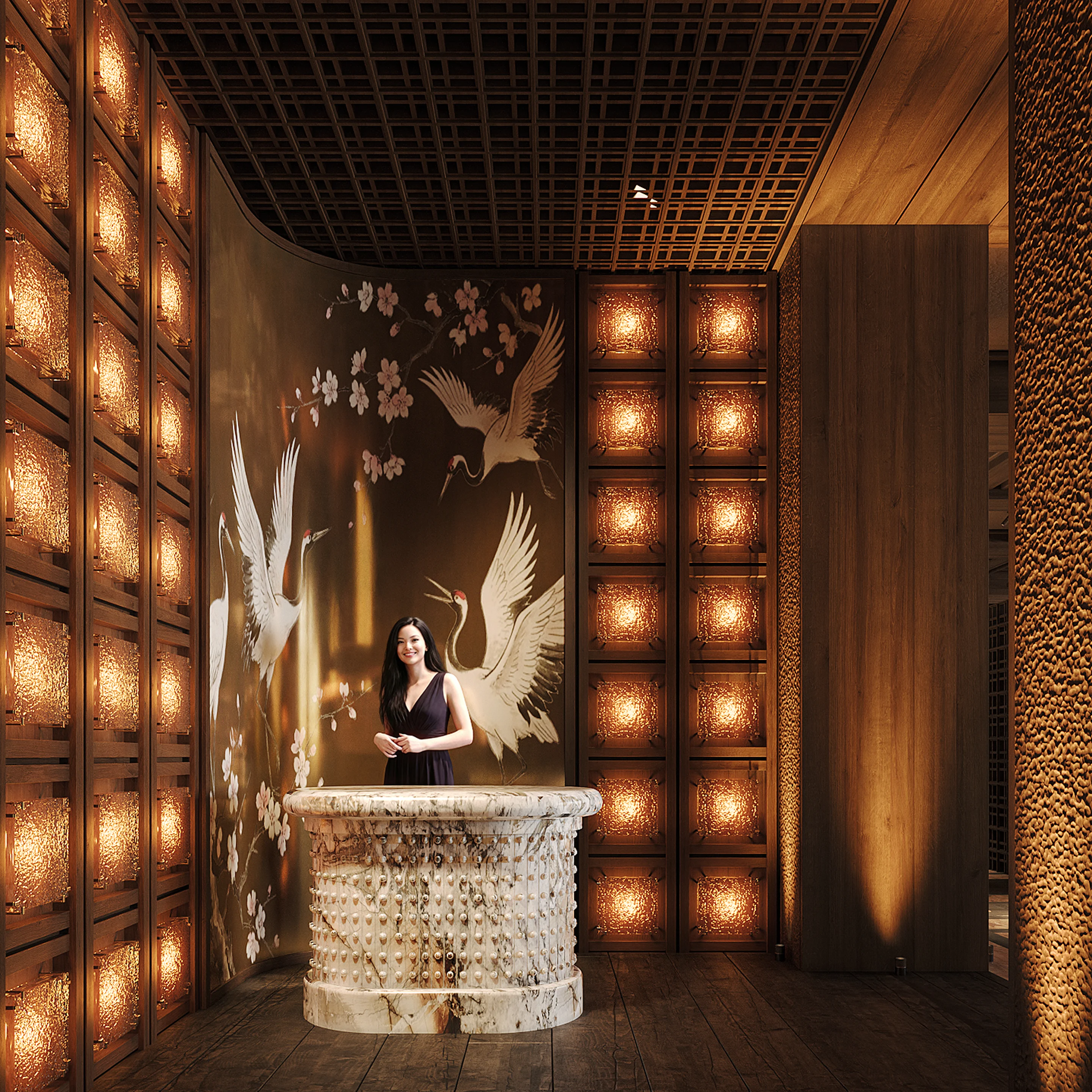
The metal wall panels carry a crane motif rooted in Japanese symbolism. In this context, the cranes reference longevity, balance, and a composed continuity of time. Rendered on metal, the pattern avoids ornamentality, reading instead as a restrained surface treatment. Light interacts with the material subtly, allowing the imagery to emerge and recede, reinforcing a sense of calm enclosure and quiet ceremony within the interior.
The metal wall panels carry a crane motif rooted in Japanese symbolism. In this context, the cranes reference longevity, balance, and a composed continuity of time. Rendered on metal, the pattern avoids ornamentality, reading instead as a restrained surface treatment. Light interacts with the material subtly, allowing the imagery to emerge and recede, reinforcing a sense of calm enclosure and quiet ceremony within the interior.
Result
A contemporary environment defined by clarity, proportion, and material harmony — designed to feel intuitive, purposeful, and enduring.
A contemporary environment defined by clarity, proportion, and material harmony — designed to feel intuitive, purposeful, and enduring.
The
Project
Project
Result
Result
Reflects Impact
Reflects Impact
Project Team
Mykyta Ryazhko
Chief Designer
Yevhenii Bezhnar
Designer
Yuliia Rutkovska
Team Lead Designer
Vladyslav Matsyura
Supply Manager
Sviatoslav Maksiuk
Architect